Kegerators and Lagering

Kegerators and Lagering

Lagering beer can be problematical for home brewers, if they are not properly equipped.  The key is that, for home brewing, kegs and lagering go hand in hand with the handy home bar invention called the kegerator.  A kegerator can do two things at once – act as a lagering closet and serve beer. If you want a little more control with your lagering temperature, you may opt for a lagering closet or separate fridge or freezer conversion.

The ideal lagering temperature for beer, according to white labs, manufacturers of specialty brewing yeasts, changes over the lagering period.  Ideally, the lagering process starts out at 51 to 53 degrees.  This temperature is maintained for the first week, and then the beer is allowed to warm to 62-64 degrees for four to six days.  After this, white labs recommends lowering the temperature five degrees per day until the ideal long-term lagering temperature of 31 to 32 degrees is achieved.  Then, lagering for six weeks at the lowest temperature takes place.

This is the most complicated lagering scenario I have heard of.  Most home brewers do not maintain such precise controls in any their brews, but it is clear that one would need to have a precise temperature controlled lagering closet in order to produce a lager of such exacting qualifications.  Keep in mind that the process of lagering was first developed by Bavarians keeping their beer in caves.

I would recommend a slightly more low-tech approach to lagering.  By utilizing your kegerator, you can lager your beer at roughly the same temperatures, as long as you are not serving beer at the same time (except at the final lagering stage, if you fudge the temp up to the regular serving temp of 38 degrees).  For the homemade conversion-style kegerators, there is plenty of room for an additional Cornelius keg, and sometimes a Sanke keg.

It is at this final stage that the keg comes into the picture.  This is the perfect time to transfer your lager beer into a keg for its final fermentation stage.  By lagering your beer in the keg for its final fermentation cycle, you can ensure that it will be a simple process to serve your beer.  After the fermentation is complete, simply tap the keg onto your beer line and serve.  No need to move the keg around and let it settle – although be sure to clean and sanitize your beer lines between each keg.

A custom temperature control can be installed into your kegerator or lagering closet if you do want to maintain such precise lagering controls as described by White Labs.  Johnson Controls produces what is probably the easiest to use temperature control unit.  The Johnson Controls unit plugs right into he wall and controls the power coming into your kegerator or freezer, turning of the power when the temperature reaches the right reading, and turning the power back on when the reading goes above the dial.

Whether you go low or high tech, lagering beer at home can be a challenge if you don’t have a kegerator or temperature controlled freezer / lagering closet.  It is not an impossible challenge, however, especially not for the home brewer who knows how to get things done.
Breweriana: Treasure Hunter's Guide to Nostalgic Collectibles from the World of Beer

Breweriana has been come to be known as the collectable detritus of brewing’s past. The term breweriana first appeared in the U.S. as the 1972 founding of the National Association of Breweriana Advertising. Most beer fans consider old beer signs, neon signs, advertising bills, old rusty beer cans, pint glasses, t-shirts, patches, or anything with a brewery’s logo on it to be breweriana. The collectiblility potential of breweriana is easy to see – some people have been able to make a great deal of money through the sale of breweriana antiques.

Breweriana is a popular field of collectables for a couple of reasons. Firstly, as with most collectables, is nostalgia. To determine the nostalgic value of an item you must look at how trivial items play through history. The item must also be authentic to be worth much. Knock off nostalgia items tend to break the spell of nostalgia eventually. As with other fields, in the area of breweriana, it is important to look at discontinued items.

Another reason why it may be profitable to trade in breweriana is that many bars look for these ancient items when assembling their décor. If you run across a big sign or neon from an antique dealer or scrapyard hustler, you might be able to turn a profit by inquiring at local pubs and the hipper dive bars. The antique décor motif is one used in curiosity shops, bars, and even big chain stores like the cracker barrel.

When looking at breweriana, it is a good idea to find out about the location of the brewery that first created the breweriana. Regionally, breweriana from closed down and defunct breweries is more valuable than it is nationally. This is because more people recognize the name brand of their once-local brewery or brewpub. It is a good bet that an old beer sign can fetch a better price in the state that it was originally displayed.

There are many folks that collect beer cans and bottles from the past. These items must be handled with care, as the beer contained within (if any) has often undergone a hideous transformation. Most collectors drill a small hole in the bottom of the can and drain the sometimes-noxious contents before setting the collectable on the shelf. Bottle caps can be pried off carefully and re-applied to achieve the same effect.

Keep a look out for older cans. Cone tops, crowntainers, and flattops are among the most valuable. Cone tops and crowntainers both have a cone like top, which was usually capped with what we cap bottle caps these days. Flattops had no tab and required a bottle opener to get at the beer inside. “Instructionals” is the term for flattops that have instructions for opening listed on the side of the can.

Some of these cans, the earliest from the Krueger Company, required their own can openers. Flattops had no tab and required a bottle opener to get at the beer inside. The "flattops" needed a regular can opener, the sharp lever-pry type. Some of these collectibles (the openers) are usually formed from a piece of steel rod which loops around and is about 5-6 inches long. Usually the beer can openers have a stamp from the beer manufacturer. One of the more popular pieces of breweriana among private collectors is the crown, or bottle cap. Bottle caps were initially manufactured in the 1890’s. Those that survived through prohibition are the hardest to find, and most of those are from defunct breweries.

Beer signs, or even posters, are another hot item, mostly because they are sought after by bars and pubs to add to their décor. Some older signs look like posters but have been printed on sheet metal. We can see reproductions of these items out on the market as well, such as the old Guinness mascot, the beer-swilling Toucan. The original designs are worth a lot, not so much for the reproductions.

When looking for breweriana, make sure you know what you are looking at. There are many books out on the subject now, such as Beer Signs for the Collector and the Beer Advertising Memorabilia series. A visit to Amazon.com or your local library will give you some insight on this field of antiques.

See related:
Breweriana: Collectible Beer Signs
Breweriana: Collectible Pint Glasses
Breweriana: Specialty Beer Glasses
Breweriana: Collectible Beer Steins

Breweriana: Collectible Beer Signs

Beer Sign

Many beer fans these days are decorating their home bars with the breweriana of the past. One field of breweriana is collectible beer signs. These signs come from many places – bars, restaurants, gas stations, and in many forms. Some beer signs are stamped metal, some are neon, and then there are the painted mirror variety. A fine old antique beer sign sure can liven up your home bar or den, and with many reproduction signs available, prices are coming down for this unique home décor item.

From antique European beer steins to pint glasses to neon signs, the realm of breweriana offers a wide variety of collectibles for beer fans the world over.

One item that no home bar should be without is a clever old beer sign. Many of the slogans used to sell beer are quite catchy. Steel or tin signs reading "Beauty is in the eye of the beer-holder", and even "Best Head in Town… Get it at Luckey’s Bar" can be found as originals or reproductions to spruce up your home bar in a comic fashion.

The advent of reproduction beer signs certainly has brought down the market for the antiques, at least for those that have been re-made. For those home bar owners who have yet to invest in an antique beer sign, this is good news! Now you can get great vintage-seeming beer signs at low prices. But for antique collectors, do not fret. If you are the one who has a great old beer sign that hasn’t yet been reproduced, you may find a buyer or have some reproductions made yourself.

One of the flashiest types of beer sign made is, of course, the neon beer sign. Almost every brand currently in large-scale production has neon beer signs made to advertise their product. Even some micro brews have these neon beer signs. Although the theories leading up to the invention of neon date back to 1675, the first neon lamp on public display occurred in Paris, France on December 11, 1910. The inventor, Georges Claude, patented his invention is 1915 in the U.S. and sold the first commercially produced neon signs to a Packard car dealership in 1924 for a whopping $2400 (for two). It was not long after that neon signs started springing up everywhere, including bars and the Vegas Strip.

Vintage neon beer signs are rare items. Neon is notorious for its short lifespan. One of the oldest neon signs still glowing belongs to "Luckey’s" bar in Eugene, Oregon. The sign currently resides indoors, due to a law banning large signs in the town which was passed in the 1970’s. The Air Devil Inn of Louisville, Kentucky claims their sign is also from 1934. This would seem to be the logical date for any of the oldest remaining, intact neon beer-related signs. 1934 was a good year, after all, the year that prohibition ended in the United States!

Of all the forms that beer collectibles take, the beer sign is one that most effectively lends the flavor of the era in which it was made. Anywhere a vintage beer sign is hung lends an aura of authenticity to the room. You will find many bars collect and line the walls of their establishments with these old signs, beer posters, and other vintage breweriana. Why not your home bar?

Breweriana: Collectible Pint Glasses

Collecting takes many forms, and in the world of beer collectibles, or breweriana, one of the most popular collectibles are the vessel by which beer is imbibed. From the early days of earthenware steins to crystal goblets, beer has been enjoyed in a variety of vessels. In recent times, the glass that most accurately symbolizes good beer is the pint glass, and many brew pubs and breweries have released their own logo-ed pint glasses, which are treasured collectibles for fans of their brand.

Pint Glasses

The number and variety of collectable items related to beer is staggering.  From beer signs dating back to prohibition days, to antique steins from Europe, to painted bar mirrors, to modern day pint glasses, breweriana is seen from coast to coast.  Of the many forms breweriana has taken, it is the pint glass which has now come to the fore of the modern collector’s shelf.

A look at the collector’s market for antique beer collectables will show you just how much beer vessels can fetch.  Some go for as little as $5, but the older items can fetch hundreds or even a thousand dollars!  Of course, you may not be around by the time your pint glasses are worth that much, but collecting is best when it is about enjoying what you have, not selling it!

These days, most commercial beer makers have produced pint glasses with their logo emblazoned upon them.  These are sold to the public at many breweries, and also to commercial bars, restaurants, and suppliers in the food and beverage industry.  The most collectable of these is the limited edition pint glass.  Usually minted in order to celebrate a special seasonal beer, these are sold at the brewery and at beer garden festivals as well. 

Commemorative pint glasses like these are great reminders of good times and good beer.  But not all commemorative pint glasses are produced for beer.  Many events are now making their own commemorative pint glasses as part of a lucrative merchandising strategy.  Events like Phoenix’s World Invitational Joust, Sports clubs, and even bands are producing pint glasses to commemorate shows, parties, and seasons.  In this way, pint glasses are beginning to move past the realm of breweriana into larger scopes of collectables. 

It is nice to have some different pint glasses around for social events as well.  A glass like the Phoenix’s World Invitational Joust commemorative pint glass can be a great conversation starter!  Glasses from local brewpubs can also remind people of good times they had there.  “Remember when…”

Often, a set of pint glasses will have a matching beer tap handle.  For those breweriana fans that own their own home draft beer system, these tap handles can add a nice touch to your serving.  There are many places on-line that sell different beer tap handles, and on ebay you can even find sets of matching pint glasses that come with the beer tap handle.

Collecting pint glasses is a common practice among home brewers and home bar owners.  Keeping an eye out for unique and interesting pint glasses can enhance your home bar experience and that of you guests – so keep an eye out for ‘em!

Extreme Kegerators

There’s a new trend taking place amongst kegerator builders that is taking some of their designs to the extreme. Bigger, faster, stronger is the American way and so why not apply that to the modern kegerator? Well here is a few of the extreme kegerators we have been seeing lately that are likely to spawn a whole new way of thinking when it comes to drinking draft beer from a kegerator.

Kegerator Cabinet

Garage Tool Cabinet Kegerators
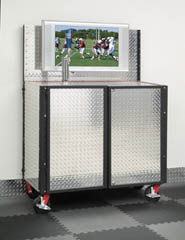
If you were out shopping for a new tool cabinet for your garage you would expect to find features like durable chrome plating or rolling casters, but would a kegerator be an upgrade you would be interested in? Garage Fabricators from Central California thinks it should be. They’ve created the Diamond Plate Kegerator Cabinet that comes fully loaded including powdercoated steel plating and welded 6" phenolic casters. The kegerator cabinet is 23.5” deep x 47.5” wide x 64” tall and has the option of a Flatscreen TV mount. For only $1,678.57 you can call one of these kegerator cabinets your own.

Arcade Kegerator

Arcade Machine Kegerators
Whether its Pac-Man or Mario Brothers, imagine having access to fresh draft beer while playing your favorite arcade games. Well, two companies we’ve found seem to have the same idea. The Custom Bar Guys in Roanoke, VA have created THE GAMERATOR. The Gamerator offers access to over 1,000 classic and current arcade games and a refrigerated interior capable of holding a pony keg of draft beer. A device this unique is surely worth the $3,995.00 price tag, so order yours today, as they are handmade upon order and take up to 4 weeks to build.

Racing Arcade Kegerator

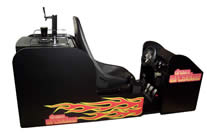
Another company integrating a beer experience for gamers is Dream Arcades out of Folsom, CA. They have created a racing arcade kegerator entitled the Octane 120 Beer Arcade. The Octane 120 is a home arcade gaming system that combines three things every adult gamer wants: classic arcade games, arcade-style racing, and a full sized kegerator with in-dash beer tap to get your favorite beverage without having to get out of the seat. Only $6995 (S+H) and it’s all yours!

Hitch Mount Kegerator

Hitch Mount Kegerator
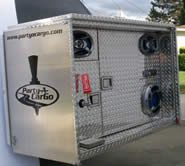
California companies seem to be all over the extreme kegerator setups and Party-A-CarGo out of Concord, CA is no exception. They have put together a hitch mounted kegerator / entertainment system. Tailgaters, campers, or weekend warriors can pour up to 160 ice cold beers, play 12 hours of music and watch the early games on TV without having to recharge their battery, refill their cooler with ice or clean up empty beer cans. Check out Party-A-CarGo to get all the details on this extreme kegerator.

Breweriana: Specialty Beer Glasses

Specialty Beer Glasses

Specialty glasses have existed throughout the ages, whether they are for wine, champagne, or different types of beers. From crystal goblets to stoneware steins, and, more recently, Belgian glass goblets, glass, ceramic, wood, and metal crafters have produced their visions of the perfect vessel for the perfect drink. The ratio of slope to surface area, breathing area, and volume contained within, are all tailored to the liquid viscosity and temperament of the beverage in question.

Having a unique specialty beer glass for each of your alcoholic beverages has always helped to make the moment special. Who ever heard of sitting around the local pub, drinking mugs of ale? That may be true for mid-evil re-creationists, but most beer fans prefer pint glasses. That way you can see what you’re drinking. In mid-evil times, you didn’t always WANT to see what you were drinking.

Having a nice rack of differing specialty beer glasses is good for when company comes over. It can encourage your friends to bring some fine ale if you have some Chimay glasses around. These glasses are called chalices, and feature a wide, flat bottom and straight sides to allow the many aromas of the monk-style Belgian ales to be smelled.

Having a set of German bier Steins up on the shelf may also lend clues to guests as to what you’d like at the next potluck (better Heineken than Budweiser, at least). The stein and the mug are best suited for ales of the inimitably quaffable kind. Beer that is guzzled easily. Beer that you want to drink a lot of because you want to become intoxicated.

European specialty beers often fall into the category of beers that should be served in specialty beer glasses. If you walk into a bar that serves a selection of Belgian ales, this is a good place to learn more about the difference between specialty beer glasses, but until then take my word for it: Weiss biers and hefeweisens have a glass which is curvy and top heavy. This gives a little lip at the bottom to catch any yeast sediment, which may result from drinking the bottle-conditioned variety of theses ales.

Pilsner glasses are the more straightforward, simple and elegant tall glasses with only the slightest of curves. The relatively narrow top channels the bitter aromas into the nose, facilitating an aromatic blast with each swig.

Lambics, being specialty ales from a nation of specialty ales, are best indulged in what is known as a flute glass. This resembles a champagne glass, but with more curves. This keeps the bubbles moving around, for like champagne, lambics are highly carbonated. The narrow top keeps the aromas from floating about too much.

Barley wine glasses usually hold less beer – barley wines being much stronger in alcohol and flavor than regular beers (around 7%-12% alcohol). In order to prevent patrons from stumbling over each other drunk or passing out in the bar, the volume of the glass is decreased. The glasses usually have a fairly open top to allow the rich and malty bouquet of the barley wine to waft above the specialty glass. Go to a good barley wine tasting and you will see what it is all about.

The Samuel Adams brewery of Boston, Mass., just this last year released a glass, which their brewers claim, serves beer as brewers intended. The Samuel Adams Boston Lager Pint Glass shares many traits with the flute, but it is bigger and has a much wider mouth.

"We wanted to create a glass that offers beer lovers a full sensory experience by fully showcasing Samuel Adams Boston Lager’s complex balance of malt and hop flavors.", said Jim Koch, founder of Samuel Adams.

And last, but not least, one good reason for having different specialty beer glasses, for different kinds of beers, is to help bar patrons to remember which glass is theirs. A night of drinking can sometimes muddle ones perceptions. In any case, is not a finely crafted beer worthy of its own glass?

Breweriana: Collectible Beer Steins

Beer Stein

Breweriana is the collective detritus of breweries and beer fans from the days past.  Breweriana takes many forms, but the arguably oldest form of collectable breweriana hails from Germany, where beer Steins or bier Steins have been crafted sold and handed down for generations.  Although the tradition of beer steins has largely faded from practical use, those who have been left with old hand me down beers steins may find that they have antique treasure worth up to $3,000.

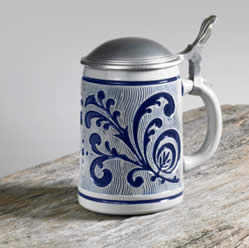
Originally known in German as the "Steinkrug", the beer stein is a traditional mug for serving beer, which can be made of porcelain, silver, crystal, glass, or wood.  Some steins have an open top, but most collectable varieties have an intricately cast or carved lid with a thumb-action lever.

As a child, I remember looking up on the shelf in the den and seeing the variety of intricately crafted beer steins.  Amid hand me downs from the family past were also spoils of war from my grandfather’s campaign in Europe during World War Two.  Such history was held in those beer steins, and swept away with the intervening years so that today, I have but two of the remnants of that fine collection.

Although not seen in the pub or at parties much these day, the practical benefits of the beer stein are as useful today as they were in the 17th and 18th centuries.  Although replaced with the pint glass in most pubs, the stein typically holds at least as much beer as a pint glass.  Older steins are likely to hold around one and a half liters of beer, which, back in those days, was considered one serving of beer.  More modern sizes from Germany are likely to hold only one liter.

It was in the 14th century that beer steins first started becoming fitted with hinged lids.  The lids were indeed sanitary measures, the result of a German law that all food would need to be covered in order to prevent the spread of disease.  This law came with many other laws that popped up at this time, when Europe came back from the brink of decimation as a result of the black plague.  For instance, pigpens could no longer run up to the edge of streets, meat that was old or came from a diseased house had to be labeled accordingly, and the German Beer Purity Laws began.  It is from this stage that beer began to be homogenized on a national level:  beer could only be brewed from hops, barley, yeast, and water.

Steins remaining from the periods earlier than the 14th century tend to be made of pewter and silver, as the earthenware and wooden steins from that period were easily broken over the yawning of the years.  The pewter guilds held onto the premier production spot for steins until the ceramics crafters of Europe invented stoneware, which proved much more durable that the old clay earthenware.  Not long after, porcelain and glazes also emerged on the scene.  A lot of advances in stein technology occurred around the 1700s, of course, during the Renaissance.

The additional benefit of the thumb-action levered steins come in especially handy for keeping unwanted materials out of your beer.  Flies, stray cigarette ash, and bits of food are always a downer when you find them in your beer.  I still use my capped stein from time to times when I find myself going to a party where such detritus may find its way into my beer.

Some varieties of stein have their own terms from the German, which you may run into while searching for the beer stein that fits you: 

  • "Humpen" are steins that are made from stoneware, using the process which partially smelts the clay together, producing a harder and less porous product.
  • "Steinkrug" are earthenware steins.
  • "Glaskrug" are glass steins, very few of which survived from ancient times.  Some of these are actually crystal.
  • Another term you might come upon is "Maßkrug", pronounced ‘moss kroogh’ in English.  These are steins that are explicitly measured out for one liter.

Hunting for steins is a fun and rewarding exercise in antique shopping.  Steins can be found in nearly every antique shop, and who knows, with a little knowledge you may find a valuable treasure in your breweriana adventure.

Evolution of the Beer Keg

From wooden casks to stainless steel and aluminum, from spile and shive to Sanke tap, the evolution of the beer keg has also influenced the evolution of beer. Driven by the mass production demanded by beer fans the world over, brewers have tinkered with and improved the beer keg in many ways during its evolution. Some of these changes have also impacted the quality of beer and even the brewing process. Though the old style cask ales, or “real ales” are still in production in some parts of England and the U.S., modern beer is dominated, even in the microbrew and craft beer markets, by pasteurized and filtered beers. Here we will look at the evolution of the beer keg and the effect mass production has had on the beer it has kegged.

Evolution of the Beer Keg

History shows us that the drinking of beer goes back at least 4,000 years. In that time, beer was most likely stored in clay urns and pots. But somewhere along the line, humans discovered that beer could be carbonated by sealing it in a bottle or cask and letting the yeasty “spirits” or “miracles” of fermentation go about their business. With this discovery came the first beer keg.

As far as historical records go, we can see a lot of light shed on the development of beer in Europe. Originally, European beer, i.e., beer-as-we-know-it-now, was predominantly kegged in wooden casks. These casks were usually made of oak or other hardwoods that had a reputation for being non-toxic. Beer at this time was un-pasteurized and usually unfiltered, which lent it to spoiling. This beer had an expiration date!

Most of the advances in brewing and kegging technology since then have focused on increasing the life span of beer. The most important of these was the process of pasteurization. Pasteurization is a process by which a product in a bottle or can is rapidly heated and then cooled. This process ensures that any organism that may be purposely or un-purposely left in the product (in this case, the beer keg) is killed. Through the use of pasteurization, beer kegs have been granted a much longer shelf life.

For some, the change in taste that the pasteurization process yields is too much to ask for the benefits of increased shelf life. An organization known as CAMRA, the CAMpaign for Real Ale, has taken up the cause of un-pasteurized and un-filtered beer. Through this group, folks interested in cask ales and real ales may find them in the U.K. Interest in cask ales is present in the U.S. as well, although the term real ale does not have the same weight as in the U.K., where strict guidelines have been established. Real ales are those ales that are still “alive” with living yeast. Cask ales are ales that are served from a cask, although not necessarily a traditional wooden one. These ales may be filtered, but they are usually cask-conditioned. This means that they gain their fizzy carbonation through the natural process of fermentation instead o the “force-carbonating” that is usually done by commercial beer makers.

The modern Sanke beer keg is designed to be rugged, easily cleaned (at least with the right industrial keg cleaning machines, and to hold a great amount of beer while still being light enough to be handled by one person. Unlike the cask, the progenitor of the keg, the Sanke keg requires little preparation and knowledge to operate. Sanke kegs took the Shive hole and the keystone of casks and put them into the same hole, locked in with a coil spring and valve, released with the push of the tap once attached.

Today, most cask ales are served from steel or aluminum casks, just as regular beer kegs are. They still require the care of an attentive landlord or barkeep, however. The gas must be vented and the beer prepared two to three days ahead of time. The benefit of a little extra tooling and care produces the result of an ale the likes of which might have been enjoyed 2,000 years ago! For all the modern influence of technology on brewing, it is refreshing to see that some people still like to do things the old fashioned way.

See related keg beer articles: History of the Kegerator, Beer Keg Directory, Beer Kegging Tutorial

Beer Trends: Women Drinking Beer

Many men consider the world of beer to be a masculine realm, and these many men are increasingly more mistaken.  With the variety and taste sensations offered by the golden age of microbrew, many women are becoming more acquainted with the pleasures of drinking beer.  In addition to the trend of women increasingly drinking beer, some medical studies have shown that, for women, drinking moderately can help fight high blood pressure and cholesterol.

Woman Drinking Beer

Although the beer market is still mostly a male demographic, beer analysts are realizing that up to 30 percent of the market is actually made up of female beer drinkers.  As of 2005, London based research firm Datamonitor has reported that low carb and light beers are driving greater beer consumption in U.S. women.  Some beer companies have even launched specific lines of beer to appeal to women, such as Heineken’s new malt cider Charli, and Poland’s Karmi.  Beer advertisers are noticing this trend as well.  A 30 percent market share cannot be ignored, and the public has already seen a shift in the content of beer ads.

Women are also drinking a lot of micro brewed beer.  According to a National Restaurant Association survey, about half of women are ordering microbrews when eating out.  Microbrewers must be even more aware of this trend in beer than industrial brewers.
 
For some women, it has been clinically proven that moderate drinking can have health benefits.  Two studies published by the Archives of Internal Medicine and the American Journal of Clinical Nutrition support this claim in different ways.  The first study found that younger women who drink an average of two to three alcoholic beverages weekly have a lower risk of having high blood pressure than those who do not drink.  This study used 70,000 women aged between 25 and 42 years old.  The study tracked the women’s health from 1989 until 2002, and found that women had a 14 percent less chance of having high blood pressure problems. 

The second study, the one published by the American Journal of Clinical Nutrition, focused on older women, 51 of them, who were aged above 60 years old.  The women’s diets were all strictly controlled. This study found that alcohol could lower cholesterol, but only if only one or two drinks were taken in a day.  The women were given strict dietary plans, including either a zero, one, or two-drink quota per day.  The health benefits showed up for the single drink group, but dropped off for the two-drink group.

With studies like these enhancing the trends already present in the category of women drinking beer, we can see that it is only more likely that this trend will continue.

But one Canadian study showed some slightly dismaying aspect for women drinking beer: "My study suggests that sober women who drink alcohol are less able to perceive facial symmetry when sober," said Dr Kirsten Oinonen, Dr. at Lakehead University in Canada,

"When sober, these women are worse at judging facial symmetry, and therefore may find less attractive men more attractive. Given that symmetry is associated with attractiveness of faces, my study does suggest the possibility that alcohol intoxication may decrease facial symmetry perception, and make people look more attractive."


It seems that scientists in Canada have found the technical term for the curious phenomenon commonly known as "beer goggles".

9 Beer And Cheese Pairings

Beer and Cheese Pairing

Cheese has traditionally been paired with wine, fruits, nuts or things like marinated olives, but recently with rise of Craft Beer in America we have been noticing more and more brew pubs and bars offering beer and cheese pairings. These beer and cheese pairings include high end cheeses and craft beers that can compliment each other in a new way. Anything from Goat to Gouda cheese and Wit to Wheat beers, it’s all fair game in the new playing field of beer and cheese pairing.

The following are 9 beer and cheese pairings that will excite your palate and bring forward flavors in the beer and cheese you probably have never tasted before.

Beer and Cheese Pairings

Vella Dry Jack
The Vella Cheese Company of California created this cheese by taking Monteray Jack and aging it another 7-10 months, until it hardened. The result is a firm, pale yellow cheese with a sweet nutty flavor.

Pairs well with: Stout, porter, dopplebock, strong ale, brown ale, Oktoberfest

Manchego, 3 mo.
This Spanish sheep’s milk cheese has a milder flavor and softer texture than older versions. A good blend of salty and nutty flavors, sweet hints, and buttery taste.

Pairs well with: Blonde ale, witbier, wheat beer

Danish Blue Cheese
A sharp and spicy, full-flavored blue with a dry texture and dark blue-green veining.

Pairs well with: Stout (especially imperial), porter, IPA, barleywine, strong or old ale

White Cheddar, 3 yr.
Made from raw milk and aged for 3 years, white cheddar has a sharp, robust, tangy flavor.

Pairs well with: IPA, stout, pale ale, amber ale

Smoked Gouda
Similiar to Edam except that it contains more milkfat, this cheese is sweet and smoky on the tongue. The edible brown rind is an indication that it is smoked.

Pairs well with: Amber ale, rye ale, brown ale, Oktoberfest, IPA, Vienna lager, porter

Traditional Hoop Cheddar
A mild yellow cheddar (best are from Wisconsin)made in the traditional way by hand-packing fresh cheddar curds into wheels and aging in red wax.

Pairs well with: Pale ale, any Belgian ale, strong ale, ESB, pilsner, dopplebock

French Brie
A soft cow’s milk cheese with a distinctive rich, creamy flavor.

Pairs well with: wheat beer, tripel, kolsh, witbier/white ale, blonde ale, pilsner

Cotswold
This is a full-flavored, creamy, whole milk cheese, similiar to cheddar, to which chopped onions and chives have been added. It is golden yellow to orange in color.

Pairs well with: Rye ale, kolsh, blonde ale, IPA, stout, amber ale, pale ale

Laura Chenel Chèvre
A classic American goat cheese with a clean fresh taste, more dry than tangy, and a bit crumbly.

Pairs well with: Kolsh, witbier, wheat beer, brown ale, ESB