$5,000 Triple Tap Arcade Kegerator

triple-tap-arcade-kegerator

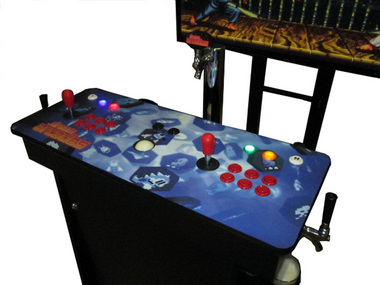
Dream Arcades, located in California, has designed a new type of kegerator for those with an addiction HD flat screens, draft beer and old school Atari® games. A natural progression from their previous model, the Octane 120 Beer Arcade, which is a kegerator driving arcade system, the Kegerator Pro 60 features over 140 classic stand-up arcade games including Ms. Pac Man, Centipede, Galaga and Street Fighter.

triple-tap-arcade-kegerator-close

It’s not just an arcade kegerator though. The gaming draft system can also access the internet, play MP3s and play movies with its DVD-ROM player. The three tap system can dispense slim homebrew kegs, soda kegs and corny kegs., so you can have beer and soda on tap for the kiddos. The arcade also features two built-in cup holders so players can keep their drinks topped off while keeping one hand on the joystick.

The Kegerator Pro 60 is available for $4,999.00.

5 Beer and Cupcake Pairings

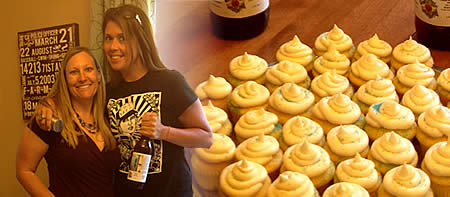
Turkey and cheddar, peanut butter and jelly, beer and cupcakes? Until now, I wouldn’t have thought the last two would ever go together. In the craft beer scene, unique pairings are popping up all over the place. The brainchild of my once upon a time college roommate Jamie, a beer and cupcake party, was planned for twenty of our closest friends.

Baker and Brewer2

Whether it was because she loves sweets or was tired of watching her husband and I drink beer and have more fun, the fact remains, this had to be one of the most entertaining and taste bud tantalizing pairings I have ever been to. Below are the pairings of my beers and Jamie’s semi-homemade cupcakes.

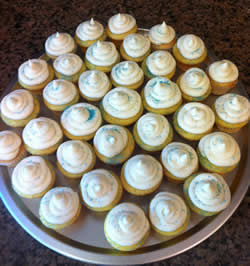
Pairing 1: Spruce Pale Ale with Vanilla Cupcakes

A recent bronze medal winner in an AHA sanctioned home brew competition, my Spruceski Brewski was paired with a vanilla/vanilla cupcake. Using regular yellow cake mix and this frosting recipe created a perfect pairing with the piney elements of the beer. Light and flavorful, this simple cupcake allowed for the ale to shine through.

Vanilla frosting

2 lbs powdered sugar

½ to1 stick of butter

2 tsp vanilla

Half n half to get to desired consistency

Vanilla Cupcakes

Pairing 2: Hop Soup IPA with Lemon/Vanilla Cupcakes

An aromaticaly hoppy IPA, this Hop Soup IPA isn’t as bitter as the first smell would make you think. While I prefer an overly bitter IPA, I made this one to appease the palettes on a broader spectrum. The cupcake chosen to go with this beer was a Lemon/Vanilla cupcake. Using lemon box cake mix and this cream cheese frosting, this cupcake provided a strong citrus backbone to the mild ale.

Cream Cheese Frosting

8 oz cream cheese softened

½ cup butter softened

1 tsp vanilla

2-3 cups powdered sugar

half n half to thin if needed

Zest lemon on top of frosted cupcake

lemon-cupcake

Pairing 3: Coconut Oatmeal Stout with Coconut Cupcakes

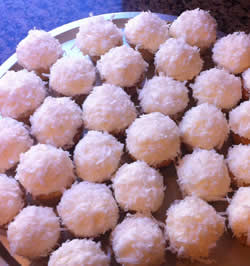
A trip to Maui a few months back reignited my love of coconut. Bringing back some Maui turbinado sugar and dehydrated coconut syrup, I added them to a tried and true oatmeal stout recipe. Finishing the ale off with a fifth of coconut vodka made the coconut apparent throughout. Obviously, pairing this with an almond frosted coconut cupcake was a no brainer.

Almond Frosting

½ stick of butter

2 lb powdered sugar

2 tsp almond extract

Half n half to get desired consistency

Scoop frosting onto cupcake and coat with shredded sweetened coconut.

COCONUT-CUPCAKES


Pairing 4: Peanut Butter Porter with Caramel/Chocolate Cupcakes

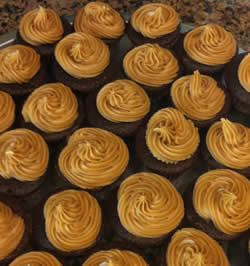
Using a family recipe along with triple chocolate cake mix, this rich combination of chocolate and caramel became an indulgent pairing with my Peanut Butter Porter. Finished off with caramel vodka after fermentation, my PBP accentuated the rich caramel icing.

Grandma’s Caramel Icing

1 cup brown sugar

¼ tsp of salt

3 tbsp butter

⅓ cup evaporated milk

**Boil for 5 minutes**

Remove from stove and add 1 tsp of vanilla

Cool slightly add 1 cup of sifted powdered sugar and beat until smooth

caramel-cupcakes


Pairing 5: Triple Hopped Barleywine with S’More Cupcakes

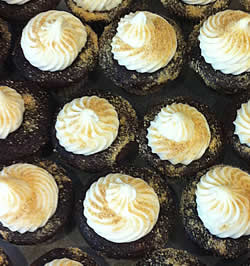
Last but not least was this 18% barleywine along with a marshmallow frosting adorned chocolate cupcake. Aged for nine months, HB3 went well with the light texture of this cupcake. As the grand finale, this combination left imbibers with nice warm bellies.

Marshmallow Frosting

4 oz cream cheese softened

¼ cup butter softened

7oz jar of marshmallow creme

2 tsp of vanilla extract

2 ½ cups of powdered sugar

When finished frosting, sprinkle with crumbled graham crackers.

smores
About this Beer Blogger Heather Erickson is a beer writer, advocate and teacher in Tacoma, WA. A craft beer lover for over a decade, she religiously brews 10 gallons a month on a SABCO Brew Magic system.

Follow Heather on

Keg Pressure. Is it that important?

CO2 saturation is an important nuance of many beers. Most beers have an ideal temperature and CO2 level that they should be served at for optimal taste. If the keg set up is even off by as little as 2 PSI of CO2 or beer gas, it can drastically affect the taste and texture of the beer being served.

Keg pressure being tested

A good understanding of the basic principles of beer carbonation will help a beer fan to know when a beer is being served properly or maybe more importantly, to know how to ensure that any home draft beer system is dialed in for the specific beer being served.

See our Dialing-In your Home Draft System guide to the perfect pour.

If you aren’t sure how carbonated your beer is or haven’t really thought about that aspect of beer drinking too intently, here’s the basic rule: lighter, less flavorful beers generally have more carbonation than rich hoppy or malty beers. This guideline isn’t 100% true, but it is fairly universal. What complicates matters is that the volume of CO2 that is absorbed into the beer can vary greatly depending on the temperature of the beer or keg. This is because the amount of CO2 or beer gas that is absorbed into the beer goes down as temperature goes up. Likewise, the amount of CO2 or beer gas that is absorbed into the beer can go up if the temperature goes down. Thus, problems arise when the temperature of the keg raises or lowers from the manufacturer’s specifications.

Fortunately, there is a rule of thumb that can help you to dial in a draft beer system so that the resultant beer tastes pretty close to what is the ideal pour, even if your temperature is a little bit off. If you are dialing in a home draft beer system, and you find yourself needing to serve beer when the keg isn’t at the ideal temperature, you can balance this out by increasing the PSI of the beer gas by +1 PSI for every two degrees Fahrenheit of temperature that the keg has gone down from the ideal temperature. This is because the beer is absorbing more CO2 gas into itself, thereby reducing the in line and in keg pressure. Similarly, you can adjust the pressure down –1 PSI for every two degrees Fahrenheit that the keg has gone up from the ideal temperature. This is because CO2 gas is escaping from the beer and causing more pressure in the keg’s headspace and lines.

beer-kegging

Home beer makers may wonder what temperature and pressure they should specify for their homemade beer? One answer I can figure is to look at the manufacturer’s specifications for a variety of beers and pick out the specific beers that share the most flavor and body characteristics with the beer you are making. There can be a lot of difference even within types of beer. For example, if the beer in question is a pale ale, does it have a light or heavy body? Is it hoppy or is the hop character slight?

When inquiring about serving pressures for different types of beer it is important to make the distinction between the proper pressure for beer gas and for CO2. Beer gas is the mixture of CO2 and Nitrogen which is used by most commercial draft serving establishments, which is usually mixed by a specialized gas mixer that is hooked up to two separate tanks, one containing CO2 and one containing N (Nitrogen). Beer gas is available pre-mixed in tanks for home draft systems, but at a significantly greater cost than CO2.

Beer gas functions significantly differently than CO2 when pushing beer. The end result is that the beer tastes smoother when it is served with the beer gas mixture and in some ways the beer gas mixture is more forgiving in terms of foaminess than straight CO2.

To understand how CO2 permeates and effects the taste of different beer types, we need to understand the beer industry’s codification of this attribute. The carbonation level of a given beer is rated in terms of CO2 volumes. The lower this number is, the less carbonated the beer is.

The following is a guide that can help you to determine the ideal temperature and pressure to use for commercial kegs and home brew. This guide is in terms of straight CO2 instead of beer gas, which is often a mix of CO2 and Nitrogen:

Carbonation Table

Most home draft beer dispensers work well at between 9-12 PSI for serving, but the numbers above may need to be adjusted according to the length of the beer line, temperature variations, etc. There are a lot of other variables, too. For example, beer can be foamy and difficult to serve if the keg has not had time to settle after transport. The type of beer lines used in the draft system can have an affect, as well as the length of the beer lines. Generally, it is better to start at the low end of the pressure range and work up to the ideal pressure, but keep in mind that the symptoms of a maladjusted draft system can be very similar whether there is too little pressure or too much. In the case of too little pressure, the CO2 is being pushed out of the beer by the atmospheric negative space, while if there is too much, then the beer is over saturated with CO2 and the gas is being pushed out by the difference between the closed system’s pressure and the pressure outside the draft system.

Black Friday Deal Center

Black Friday Cyber Monday

Black Friday deals have started early this week, so check back with this Black Friday Deal Center page often for the latest specials and deep discounts on kegerators, draft dispensing equipment and homebrew supplies. We’re getting exclusive deals and promo codes on kegerators, draft beer dispensers and homebrewing supplies from some of our biggest partners.

Make sure the check out the Kegerator Deals page for more savings coupons and discounts.

We’ve linked each of our partner stores to their kegerator and beer equipment pages to make finding Black Friday deals even easier!

Click on the store logo below to go directly to great deals!

Amazon WayFair Home Depot eBay
Kmart Sears Overstock KegWorks
MoreBeer WalMart Beverage Factory Sur La Table
Sams Club Micro Matic Lowes Kegerator
KaTom IVGStores Instawares HayNeedle
Home Click High Gravity Garage Dealer Wine Enthusiast
BarWare AJ Madison Adventures in Homebrewing ABT
northern-brewer

Side Deals

Door Mounted Kegerator Conversion Kit
Normally $124.00, now $106.00.

ThinkGeek: BLACK FRIDAY AND CYBER MONDAY DEALS!
All things geek and beer.

Weekend Homebrew Deals

We’ve scoured the web for specials, deals and clearance items for homebrewers. Check out these homebrew deals!

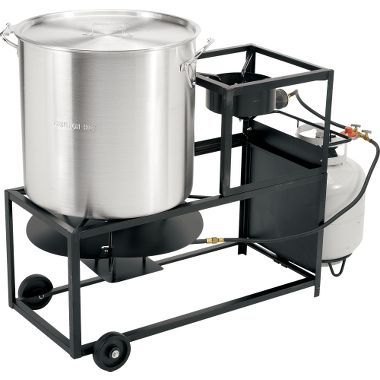
Dual Burner Brew Stand

Dual Burner Brew Stand – was $191.91, now $153.00 w/ free shipping

PSI Gauge – was $10.90, now $5.90

2.5 Gallon Corny Keg – was $119, now $99

Draft Beer Tower – was $90, now $65.70

Kegerator – was $623.75, now $447.81 w/ coupon 20OFFKEGOCT

S/S Blowoff Bucket – was $29.95, now $9.95

Weldless Bulkhead Kit – was $13.00, now $11.00

Scratch & Dent S/S 5 Hole Drip Tray – was $179, now $129.00

Cereal Killer Grain Mill – was $109.99, now $99

S/S Carbonation Cap – was $24.99, now $19.99

S/S Brew Paddle – was $36.95, now $ 29.95

Kegerator Robots

Beer and robots are a great combination. As industrial America has disappeared, industrial art and hobbies have sprung up, utilizing the tools of the bygone industrial age. Now, we can count along with the many technological wonders of the modern age, beer launching robots, beer serving robots, automated home breweries, and even robot kegerators. A beer-launching robot has even been seen on the Late Show with David Letterman.
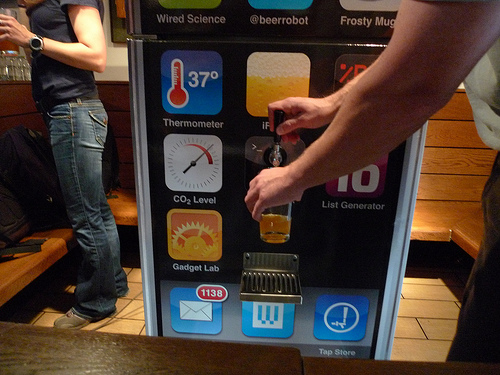
Kegerator Robot
Wired has a kegerator robot that serves beer

Robot building just goes better with beer. There are few hobbies that don’t go better with beer – granted, it may make hobby more dangerous, but with danger comes excitement. With excitement, danger, and beer, usually there is blood as well. It follows naturally that roboticists making robots in there spare time, drinking beer, would make such robots as the ‘killer’ robots pictured here. These robots, the Subjugator, Drunken Master, and Spiderbot, were made by Christian Ristow in association with RoboChrist Industries.

A decline in industrial manufacturing and industry in the United States has not meant a decline in inventiveness in the United States. This is especially true when it comes to beer and robots. Coming out of the home brewing revival in the 1970s was also a revival of the D.I.Y.(Do It Yourself) mindset. It took a while for D.I.Y. beer and D.I.Y. robots to meet up, but finally, we are there. Sadly, most beer LAUNCHING robots can still only fire commercially produced canned beer, and not home brew. However, these two hobbies come very close with robots such as Wired’s Beer Robot – a robot kegerator.

The engineers over @ Yelp.com took a keg and tap, an Arduino, an RFID reader, and an iPad and turned them into an amazing kegerator robot. The device not only tracks who’s been drinking but also tracks information about the beer as it’s poured, including the temperature and ratings of recently poured drinks (so you’ll know when the keg is on a roll). They even put together a bookmarklet to monitor and track the keg remotely.


It should be noted that the recent wave of D.I.Y. robot building has even taken the term “home brew” to describe many garage style hobbies. This term is often used to describe a hobby interest that comes from a technical or industrial field, but is made at home, such as home brew computers, home brew robots, and even engines. This is further proof of the connection between beer and robots.

One great moment of inspiration and promotion of home brew robotics was when the Late Show with David Letterman had a special guest: the Beer Launching Fridge. Also, the beer launching robot’s maker, John W. Cornwell, Duke University graduate. The Beer Launching Fridge that Mr. Cornwell invented launches beer up to 20 feet, and is remote controlled. In a blog post, Mr. Cornwall expressed the possibility that he may make his Beer Launching Fridge commercially available, and with improvements: the new design would allow a user to swivel the robotic armature with the remote, effectively aiming the launcher.

The phenomenon of beer and robots is not only confined to the garage and DIY inventors. Asahi has built a little robotic bartender that stores and pours beer. This invention can be seen at the following link: http://www.youtube.com/watch?v=2tXmGYk_A_c This robot seems to be built more for cuteness than efficiency, though. It takes about three and a half minutes for it to pour a beer, and it spills some, too.

One great take on the beer launcher is a mechanical unit which is foot pump operated. The ‘Ultimate Tailgating Machine’ holds 12 cans of beer and was the final group project for three student of a Design Class at U of I. See it in action at the following link: http://www.youtube.com/watch?v=LCIGIe2T4j0 Brought to the world by Dan Larson, Justin Tobin, and Steve Walker.

As we can see, beer, kegerators and robotics are a great combination, with potential for great fun.

It don't matter if you're black or white

MJ said it best and now it’s your turn to choose! Tap Boards, Inc. already has their patented write/erase tap handles in Chalkboard. Coming soon in mid-October there will be a new White board version added to the line. So, now it really doesn’t matter if you’re black or white. Just make sure you keep the moon walking to a minimum. We know how excited you all get about new beer gadgets.

The (dry erase) White board Tap Boards will be available mid-October (just in time for the holidays) on their website TapBoards.com and we will have them on Kegerators.com too. The new White board version comes with one standard black dry erase pen, but the new white surface will allow you to get a little more creative with colored pens.

Tap Boards

Kegerator Modifications: Splitting CO2 Lines

Splitting CO2 Gas LinesOne of the great benefits of owning a kegerator is tinkering with and modifying it.  One of the most popular modifications is to add an additional tap or two.  To modify your kegerator to dispense additional beers, you will need to split your CO2 lines.  You will probably want more than one tap on hand, so your kegerator can dispense from sanke kegs, soda or Cornelius kegs, or whatever keg may appear at your doorstep.  Splitting your CO2 lines can be as simple as a t-joint or as complicated as a multi-tap regulator for dispensing different beers at different pressures.  We will look here at the kits and equipment currently available on the market and processes for modifying you kegerator for dispensing any kind of beer from commercial to home and craft brew.
Co2 Splitter
For adding a quick extra beer tap onto your kegerator, a stainless steel or plastic t- or cross joint will do the job of splitting the CO2 to the different kegs – but gas leakage may occur if your keg tap isn’t maintained properly.  This is the most inexpensive way of splitting your CO2 line, and all you will need is the appropriate taps for the beer you want to dispense, surgical tubing, hose clamps, and of course the kegs of beer.  Adding an inline valve will even make it so that you can minimize gas wastage when changing kegs.  The T-splitter will cost you less than $5 and the inline valve probably less, and you can find for these items online or at your local hardware store in the plumbing section.  Aquarium supply stores may also have the fittings.  You will still need beer taps – more on that later


A more refined approach to splitting CO2 lines is the use of a gas distributor.  These units have one gas in and multiple gas outs to facilitate multi tap kegerator modifications.  The gas distributor has valves for each of the line-outs, and you can use a gas distributor to split your gas out in multiple directions.  Gas distributors are available in a number of configurations.  Two way gas distributors cost roughly $40, while the larger multi tap distributors with 6-8 line-outs can cost $120 or more.

For a draft beer system that requires dedicated individual pressures for different beers, a secondary regulator panel or a dual body CO2 regulator is necessary.  This is very advanced stuff most people need not go into this much detail, but these units will cost upwards of $150 just for the regulator panel, the price depending on how many regulators you need, or $120 and up for a dual body CO2 regulator.  If you want to force carbonate your beer while dispensing beer from the same unit, a secondary regulator panel or dual body CO2 regulator may be the modification you want to make to your kegerator.

One factor to keep in mind when splitting your kegerator’s CO2 line is that your operating pressure will decrease depending on the length of tubing you use.  When long lengths of tubing are used, the tubing expands and makes it difficult to keep the CO2 pressure at a constant rate.  The same also goes for beer lines.  If you cannot avoid having a long-draw system, you will need to use certain materials for the majority of the draw in order to ensure optimum beer quality and cleanliness.  You should strive to have no longer than six feet of regular surgical tubing from CO2 canister to keg, or 12 feet of beer lines all together from between keg and faucet.

Although there are some exceptions, long-draw systems still push beer from the keg via CO2.  The standard flexible surgical tubing is used, but coupled with a special “barrier tubing” soon after leaving the keg.  Barrier tubing is thicker than regular surgical tubing and has a mesh cover, which keeps the vinyl tubing from expanding and causing CO2 pressure irregularities.  With the use of a tubing flare tool, you can create your own stainless steel tubing for your beer lines as well, which are by far the most durable and cleanest options, although they are harder to build and modify.

See related:
Modification Project: Adding Double or Triple Tap Tower
Placing CO2 Disconnect Couplers
Installing Co2 Lines Efficiently
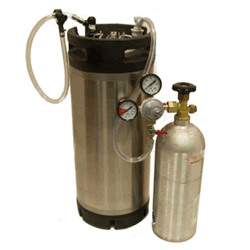
CO2 Tank, Pressure and Regulator Questions
CO2 Tank Guide

What's so Special About Kegerator Beer?

Ah, to enjoy a cold draught beer after a long day of work or play – and in the comfort of your own home.  Kegerators can make any gathering more special, whether it is a night of music, movies, gaming, or football.  Finding the tight kegerator for your home can make all the difference, and they are essential appliances for the home bar, whether it be in the den or a speakeasy-style basement bar.  For home brewers, kegerators are the perfect choice for serving your kegged home brew.

Canned and bottled beers are great – but they run out so quickly.  They also take up a lot of space in the fridge.  This is why kegerators make such great additions to any beer fan’s home, whether you are a home brew hobbyist, a craft beer enthusiast, or just a fan of beer.  Draft beer just tastes better, especially at home.

Kegerator Beer

The best thing about having a kegerator around is when company comes over.  To be able to say to friends,

“Help yourself to as much beer as you want – the kegerator is right over there!”

That is a beautiful moment.  I remember my first night of kegerator drinking.  I believe it was Austin, TX micro brewery Live Oak’s Big Bark Amber Ale.  My host was generous, and the beer cold and tasty – thanks to his kegerator.  It certainly made that visit “just to say hi” much more special.

Buying a kegerator doesn’t have to be expensive, either.  Kegerator conversion kits can turn that old fridge that you don’t know what to do with into a useful appliance.  They are available for $50 to $250, depending on what design elements you wish to incorporate.  You can even put that top compartment freezer to use keeping pint glasses and mugs nice and frosty.

If you are looking for something pre-packaged, you can still get a mini kegerator for as little as $100.  These mini kegerators dispense store bought mini kegs of the five and six liter variety with optimum ease.  Some even dispense the beer with CO2, supplied via cartridge, to ensure that your mini keg beer keeps for up to 30 days.  But one party and that mini keg is toast, trust me.  If the beer has not been drank after 30 days, you are doin’ it wrong!

Most kegerators have the capacity to serve at least one 15 1/2  gallon keg of beer at time.  With pony kegs or soda kegs, and multi-taps, you can even have more than one beer on tap at one time.  Some kegerators come with four or more beer taps.  That’s better than a lot of bars! 

Kegerators are also highly customizable.  If you want more taps, you can always add them later.  Tap handles are another way to customize your kegerator.  Put tap handles of your favorite beers on your kegerator, or make custom ones out of a gear shifter or a My Little Pony.  I have even seen someone take a wooden wine barrel and use it to build a façade around their kegerator to make a most convincing and entertaining illusion that the beer flowed up right from a wooden keg.  You can equip your kegerator with a nitrogen system for smoother draughts or add a filtration system for clearer pints.  Spice up your kegerator with custom skins or beer decals.

Whether mini or full sized kegerator is for you, the benefits of having draft beer at home remain the same: make your home more hospitable, have better parties, and never be short of beer, even on Sunday.  A kegerator in your home bar is a definite plus, whether on game day or for a great birthday party.  All of this is what makes kegerator beer so special.

Kegerators and Lagering

Kegerators and Lagering

Lagering beer can be problematical for home brewers, if they are not properly equipped.  The key is that, for home brewing, kegs and lagering go hand in hand with the handy home bar invention called the kegerator.  A kegerator can do two things at once – act as a lagering closet and serve beer. If you want a little more control with your lagering temperature, you may opt for a lagering closet or separate fridge or freezer conversion.

The ideal lagering temperature for beer, according to white labs, manufacturers of specialty brewing yeasts, changes over the lagering period.  Ideally, the lagering process starts out at 51 to 53 degrees.  This temperature is maintained for the first week, and then the beer is allowed to warm to 62-64 degrees for four to six days.  After this, white labs recommends lowering the temperature five degrees per day until the ideal long-term lagering temperature of 31 to 32 degrees is achieved.  Then, lagering for six weeks at the lowest temperature takes place.

This is the most complicated lagering scenario I have heard of.  Most home brewers do not maintain such precise controls in any their brews, but it is clear that one would need to have a precise temperature controlled lagering closet in order to produce a lager of such exacting qualifications.  Keep in mind that the process of lagering was first developed by Bavarians keeping their beer in caves.

I would recommend a slightly more low-tech approach to lagering.  By utilizing your kegerator, you can lager your beer at roughly the same temperatures, as long as you are not serving beer at the same time (except at the final lagering stage, if you fudge the temp up to the regular serving temp of 38 degrees).  For the homemade conversion-style kegerators, there is plenty of room for an additional Cornelius keg, and sometimes a Sanke keg.

It is at this final stage that the keg comes into the picture.  This is the perfect time to transfer your lager beer into a keg for its final fermentation stage.  By lagering your beer in the keg for its final fermentation cycle, you can ensure that it will be a simple process to serve your beer.  After the fermentation is complete, simply tap the keg onto your beer line and serve.  No need to move the keg around and let it settle – although be sure to clean and sanitize your beer lines between each keg.

A custom temperature control can be installed into your kegerator or lagering closet if you do want to maintain such precise lagering controls as described by White Labs.  Johnson Controls produces what is probably the easiest to use temperature control unit.  The Johnson Controls unit plugs right into he wall and controls the power coming into your kegerator or freezer, turning of the power when the temperature reaches the right reading, and turning the power back on when the reading goes above the dial.

Whether you go low or high tech, lagering beer at home can be a challenge if you don’t have a kegerator or temperature controlled freezer / lagering closet.  It is not an impossible challenge, however, especially not for the home brewer who knows how to get things done.