Kegerators.com's Top 5 Names in Domestic Beer

The U.S. beer industry is in a constant state of flux. New ideas and innovations are changing the face of beer every year, especially in the micro brew market. As the primary field of growth in the brewing industry, kegerators.com will name the top ten names in domestic craft beer production. These are names to look out for. These are brewers associated with quality, ingenuity, tradition, social responsibility, and most of all, good tasting beer. For these qualities, we name New Belgium Brewing Company (Fort Collins, Colorado), Dogfish Head Brewing Company (Rehoboth Beach, Delaware), Spoetzl Brewery (Shiner, Texas), Rogue Ales (Newport, Oregon) and St. Arnolds Brewery (Houston, Texas).

New Belgium Brewery New Belgium Brewery of Fort Collin, Colorado, is here honored for the company’s integrity, ingenuity, and the amazing quality of its high production level brewery. A forward thinking, 100% green company which shares its profits with its workers, New Belgium has consistently contributed innovative brewery techniques, while at the same time maintaining ancient and venerated beer traditions, such as its 1554 Enlightened Black Ale. Kudos to the first beer company to recycle its waste grain and harvest methane from it! This full circle renewable energy source now contributes 30% of the energy required to produce over 450,000 barrels of beer annually.

Dogfish Head Brewing Company Dogfish Head Brewing Company, a smaller brewer located in Rehoboth Beach, Delaware, is here honored for ingenuity and fearless experimentation in the realm of brewing. These brewers have gone where few dare to go, preparing beers of up to 18% A.P.V.! Using admixtures such as raspberries, raisins, blueberries, chicory, and coffee, Dogfish Head has prepared some mighty interesting and mighty tasty concoctions. Brewers of the Midas Touch, Dogfish Head has even created a facsimile of a brew scientists discovered only traces of on urns in King Midas’ tomb. A true blend of tradition and experimentation. But you’ll have to go to Delaware to sample some of their latest innovations: small scale craft spirits!

Spoetzl Brewery, of Shiner Spoetzl Brewery, of Shiner, Texas, is a middle-sized brewery (much bigger than a microbrewery at 300,000+ barrels per year) that has, just in recent years, ventured into the craft beer market. Spoetzl is here honored for returning to the craft beer traditions from the precipice of the homogenized U.S. beer fad. For many years, the Spoetzl Brewery kept mainly their Shiner beer going, but now has distribution for many craft beers, in addition to their rather main-stream tasting Shiner and Shiner light. All of this is, in part, to Shiner’s centennial beer program, which started in 2005. The centennial program began producing one special edition beer in small batches at the end of each quarter. With this foray into the realm of experimentation, the brewers at the Spoetzl Brewery found flavors that were received quite favorably. Spoetzl’s Shiner 96 Märzen Ale, Shiner 97 Bohemian Black Lager, Shiner 98 Bavarian Style Amber, and Shiner 99 Munich Style Helles Lager, are all high quality craft beers worthy of recognition along-side the best microbrews of the day.

Rogue Ales Rogue Ales, of Newport, Oregon is a brewery which has maintained an exacting level of perfection with its recipes while keeping an open mind toward new innovations in brewing. With brews as diverse as Soba, Hazelnut Brown Nectar, and the Juniper Pale Ale, Rogue has demonstrated it’s willingness to live up to its namesake. Yet still, for all this invention, Rogue beers are remarkably reliable – one bottle will always taste like the next, even with such extreme different flavors. Here’s another great thing about Rogue Ales: they are all without preservatives or pasteurization.

Saint Arnold Brewing Company Saint Arnold Brewing Company, of Houston, Texas, is here honored for their dedication to serving their community with traditional, well made craft beers. You may not have heard of St. Arnolds unless you have visited central or east Texas. This is because St. Arnolds is more devoted to serving their immediate community than they are in expanding their distribution. St. Arnolds certainly stands a part from the other breweries in this list, being a straight-forward craft brewery with an honorable dedication to traditional beer styles. St. Arnolds has had quite a time dealing with the destruction of Hurricane Ike, but they are moving into a new location and will surely be up and running again soon.

These have been Kegerators.com‘s five most distinguished domestic brewers of 2008.

Mini Kegerators

When discussing mini kegerators, it is important to make the distinction between which type you are talking about. There is the kegerator that is made from a mini refrigerator, and then there is the mini kegerator gadget. The mini kegerator that is made from a mini fridge is a compact, but still largely immobile device that is usually home made, using half sized or even smaller fridges. The mini kegerator that is a gadget is a new appliance on the market. It is quite portable, and a good way to enjoy draft beer while on the go – that is what we are talking about here.

Mini Kegerators"Gadget" Mini kegerators are a new retail item that helps you to enjoy cold beer without the expense of owning a full-on kegerator. Mini kegerators are becoming a more and more affordable way to ensure that you have draft beer on the go. Most brands come with a variety of options, such as DC power, cleaning kits, and temperature control. Mini kegerators that dispense 5 liter mini kegs are made by Krups, Heineken, Avanti, EdgeStar, Vinotemp, and other companies as well, so there are a variety of models to choose from.
These gadgets are currently priced right around $200 – $300. For all practical purposes, the less expensive units do just as good a job as the more expensive ones. For example, the Avanti Mini-Pub Kegerator retails for about $230, and the Vinotemp Mini Keg Beer Dispenser retails for about $100 more – $330. The Avanti has the benefit of being more compact, and the Vinotemp has a better temperature regulator. So, unless you have really exacting temperature requirements for your beer, you might as well get the more inexpensive brand – it is more likely to fit in the trunk or boat, or whatever you are traveling in. General compact-ability is a feature of most mini kegerator gadgets – at least, compared to the mini fridge kegerator or a full-blown kegerator. For this reason, these compact mini kegerators have enjoyed popularity among the draft beer fan crowd.

One of the great advantages of the mini kegerator is that they come with AC and DC power supplies. This allows you to run the mini kegerator off of your car, RV, or boat battery, even solar systems can power these mini kegerators. This makes it easy to take a small amount of beer (standard mini kegs hold 5 liters) out for a picnic, boating, or car camping trip. Mini kegerators can also be easily installed into your RV or boat as a semi-permanent appliance.

New advances in refrigeration technology may see a whole revolution in the way we cool all manner of things, including beer. Researchers at Penn. State have made headway in electromagnetic cooling devices. These devices operate without the use of a compressor or of Freon, and, if commercially viable, will produce machines that are much more compact than the bulky fridges we are used to. On top of this, Ben and Jerry’s, the famous ice cream men, have developed a way to cool their dessert via sound waves. By using a machine that employs pressurized helium gas and ethyl alcohol as a cooling medium, they keep their ice creams at a delightfully cold level.

The increased popularity and availability of kegerators is likely to create an industry that is capable of harnessing these new technologies and putting them to good use. It seems clear that, with this latest invention of the mini kegerator, the kegerator industry is willing and capable of incorporating new, inventive ideas into its arsenal of products. In short, we are sure to see more and more interesting forms of kegerators in the coming years.

The new options that these mini kegerators provide give fans of draft beer an excellent opportunity to enjoy draft beer in a variety of settings. While in the past, draft beer fans have gone to great lengths to install kegerator systems in their R.V.s, now it as simple as shopping around for a convenient new appliance. Some day, we may see mini kegerators replacing coffee makers in the office (certain offices, anyways), or at least be seen side-by-side with them. As it is, we will see them on the beach, the mountain retreat campsite, at sea, and at the omnipresent tailgate party. Draft beer to-go has become a reality at last.

Beer and Oysters: Sea foods and Their Malty Counterparts

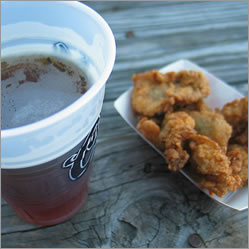
Beer and Oysters go great together.  Beer is commonly served with seafood of all sorts.  The key to enjoying your seafood dinner is finding just the right beer to enjoy with it.   From fish and chips to sushi to raw or fried oysters, complimentary flavors can be found.  The culinary joys of beer and seafood are celebrated in festivals, such as Richmond, Virginia’s "River City Beer & Seafood Festival"; recipes, such as Oysters boiled in beer, beer-battered fish; and cultural traditions from seaside villages all over the world.

Beer And OystersMany kinds of beer work well with oysters.  Porter, Stout, IPA.  Strong flavors work well to cleanse the palate in between bites so that the fishiness of the oysters is not overwhelming.  A good, clean break in between bites is highly desirable.  In regions where beer choice is limited, beer is still preferable to non-alcoholic drinks.  For raw sea foods, a hard liquor is helpful for keeping any rouge bacteria in check.  Tequila and Sake shots especially, although please don’t mix.

If you are talking about grilled fish, grilled salmon, mussels, prawns, your best bet for a complimentary beer is a dark beer.  Porter, Schwarzbier, Stout, all go well in this setting.  I recommend the black lager especially for enjoying beer and oysters a hot or warm day.

Lighter beers have their place, too.  Certainly for broiled or boiled fish, shrimp, mussels, a pale ale, a pilsner, or even wheat beer can be quite complimentary.  Bitters and IPAs can also help break down the oily taste of deep fried sea foods (very popular).  A good idea to wash down a plate of fish and chips.  This would be my choice for raw, shucked oysters, especially when I am enjoying them on the gulf coast of Vera Cruz in Mexico.  I always like to stop for raw oysters when traveling in that region.

One place where you can sample all of this and mix and match is Richmond, Virginia’s River City Beer & Seafood Festival in June.  Over 40 varieties of beer show up among vendors, brewers, and chefs at this festival annually to celebrate the union of microbrew and seafood.  Music is provided by the festival, and samples are provided for a festival fee.  For $25, you can buy a festival sample mug to enjoy unlimited samples from the brew selection.

Another festival honoring this tradition is the Confluence Wine, Beer, Seafood & Music festival in Oregon state’s Douglas County on the Oregon Coast.  Admission is only $7 at the door or $5 in advance. Confluence means "the flowing together of two rivers or more rivers."  The festival is held at just such an intersection, at Gardiner, Oregon, just two miles north of Reedsport.  A confluence is also "a coming or flowing together, meeting, or gathering at one point."  The perfect name for an event which gathers so many different aspects together under one banner.

Brewers in the land down under have found a way to express their love of beer and seafood. From Australia comes a unique beer designed specifically to enhance the flavors of seafood.  According to Blue Bottle Beer’s website:

"…[we’ve joined] American hops with German yeast, Australian barley and fused it with the cleanest water. We then added our unique ‘zesty finish’.  Bluebottle Beer ® is a seductive blend of lifted aromatics, bitterness, and a citrus sting to enhance the flavors of the sea."

This would seem to go well with broiled, boiled, or BBQ’ed fish and seafood.  The zesty citrus sting they allude to gives me the idea that some Belgian ales would also enhance a seafood meal. 

Recently, when I went to eat at San Antonio’s Water St. Oyster Bar, I encountered the particular mix of Chimay with some Arcadian style cooking, and I must say I was quite pleased!  The especially spicy styles of cooking coming from the Louisiana area need a powerful beer to balance them best.

This Fall’s Ultimate Kegerator Guide

Make Space This Fall For These Kool Kegerators …

EdgeStar Kegerator

EDGESTAR HAS BEEN DISCONTINUED

EdgeStar Kegerator 
Under $400.00
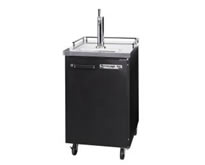
This kegerator from EdgeStar is the most affordable full-sized kegerator on the market today. The kegerator stores up to a full sized half shell Sankey standard keg and is perfect addition to your home for fall entertaining. See Kegerator Details


Haier BrewMaster KegeratorHaier BrewMaster Kegerator
$529.99
This is the Honda Civic of kegerators. Durable, dependable and you will get a lot of mileage out of this machine. The kegerator will hold a full sized keg or multiple homebrew style kegs when modified with a dual or triple tap tower. The auto defrost, temperature control and cooling plate are nice features too.  See Kegerator Details


Beverage Air KegeratorBeverage Air Kegerator
$1,399.00
With this heavy-duty kegerator you can keep your keg cold with precision. Perfect for the serious draft beer aficionado, this kegerator comes with a stainless steel worktop and high quality refrigeration components. This kegerator would probably last a lifetime, so if you need a workhorse this is your kegerator. See Kegerator Details


Mini Keg DispenserMini Keg Dispenser
$159.99
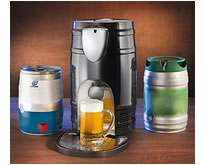
Ever seen the 5 liter mini-kegs at the supermarket? Well here is a 5-liter dispenser/cooler that will keep your favorite beer or soda ready-to-serve cold. Features include an easy flow design, drip tray cover, brushed aluminum door panel and indicator light. HelmanGroup.com


Kenmore KegeratorKenmore Kegerator
$594.99
This kegerator is a nice full sized unit with all the bells and whistles of the Haier BrewMaster kegerator. This unit stores a half-barrel keg, so your favorite beer is always on tap. You can also store quarter-barrel kegs and mini kegs. Store pickup at Sears is a nice option for those looking to save a few bucks on shipping costs.  See Kegerator Details


SudsBuddy KegeratorSudsbuddy Kegerator 
$1,399.98
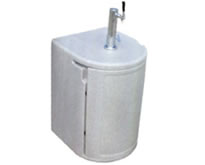
A truly stylish kegerator that definitely is thinking outside of the box. Made of polyethylene plastic, this kegerator is dent-resistant and weighs less than 60 lbs making it easy for portability. It even has a cigarette-lighter adapter. How cool is that?. See Kegerator Details


Viking KegeratorViking Kegerator 
$2,899.00
If you are an appliance snoot that only lives for the finer things in life, then I would like to introduce you to the Viking kegerator. This is the Lamborghini of kegerators. Stick this beauty next to your outdoor Sub-Zero and Wolf range to wow your guest and serve delicious draft beer. See Kegerator Details


Perlick KegeratorPerlick Kegerator 
$2,889.00
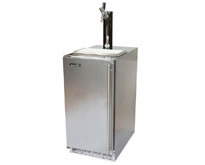
This ultra-slim kegerator defines luxury. It is designed with fully integrated depth to allow flush fit with surrounding cabinetry. If you are thinking of installing a kegerator into your cabinetry or you are a contractor designing a  home bar, you can’t go wrong with this ultra modern kegerator design. See Kegerator Details


Fridgidaire KegeratorFridgidaire Kegerator 
$1149.00
This is for all you old school beer lovers that built a kegerator when you were in college out of an old refrigerator. Well, here is a beautiful replica made by Fridgidaire. It features a freezer on the top to store cold mugs and accommodates Up To a 16-Gallon Keg.  See Kegerator Details

Keg Theft: Kegs Disappearing From Bars and Breweries

Not an activity we at Kegerators.com encourage, stainless steel kegs are disappearing from behind bars and breweries to be sold for scrap metal or possibly for home brewing.

The trend comes as the stainless scrap price has more than doubled in the last five years, making an empty 18-pound keg worth more than $13, according to price data for steel scrap sold in Chicago.

Hawaii actually passed legislation making beer-keg theft a crime. They may not have needed the law since existing theft laws probably would have covered it. But just for good measure, they passed it anyway.

Pacific Business News reported back in May:

Hawaii beer wholesalers reported the theft of more than 350 beer kegs last year, up sharply from the 30 stolen in 2006. Nationwide, approximately 300,000 of the stainless steel containers are stolen annually.

"This is a huge problem," Tim Lyons, legislative liaison for Anheuser-Busch Cos., testified in favor of the law. "It has just escalated beyond any reasonable proportion."

"Metal keg theft is a growing problem because they can be redeemed for fast cash at scrap dealerships," added Lance Hastings, Western regional director for state government affairs for Miller Brewing Co.

Kegerator Video Contest

Enter to Win
Kegerator Video Contest

Well… It’s that time again. Time to give away a really expensive appliance in return for a few laughs. If you have not already heard, we are running a video contest asking the question, "What would you do for a kegerator?"

This is your chance to get crazy stupid-creative and impress the judges with your mad director skills. The lucky winner will receive a free kegerator and forever enrich their lives with kegerator companionship.

The skinny on the contest is as follows:

1. Make a funny, shocking, cool, stupid or impressive video showing us "What you would do for a free kegerator".

2. Submit your video to YouTube or Google Video.

3. Fill out the form here and you could win a free kegerator.*

Good Luck and go crazy!!

Deadline to submit a video: August 31th

Custom Kegerator Design

When designing and building a homemade kegerator, there are many ways you can make your kegerator uniquely your own. In addition to simple additions like varying tap configurations and tap handles, custom skins are available, and some folks have even gone do far as to build their kegerators into their R.V.s to ensure no lack of beer on vacation! Recently, some inventive brewers have taken to installing LED lights into their custom kegerators. If you are developing a home theme bar, a custom kegerator design can greatly enhance your bar’s atmosphere. You will want to think not only about looks, but also about what kind of beers you want to serve through your kegerator, and equip your device accordingly.

One aspect of custom kegerator design is the right choice of beer faucets. For example, equipping your kegerator to handle stout ales will require the installation of a new faucet shank with a stout-specific beer shank. The stout beer faucet connects to standard beer shanks, so at least that part of your installation will be the same as for regular beer faucets. These stout shanks pour at a slower rate to allow the stout to develop it’s head properly without gaining too much carbonation. Long-nosed “European” style beer faucets can also help – especially if you are having troubles with over-foamy beer.

Custom tap handles always help you to identify which beer is flowing through which tap. By having a large selection of handles, you can be sure to have the right handle for any occasion. There is no real difference in the function of the beer faucet tap handle unless you are short on overhead space.

The only custom kegerators I have seen that have space issues regarding tap handles are the sidewall mounted R.V. kegerators. These kegerators bring all that you need to your outdoor vacation, and enhance the value of your R.V. as well. Outdoor systems look to be built into already existing outside panels. Systems are on the market for either indoor or outdoor serving, and run off of the R.V.’s standard twelve volt power source. Building your own R.V. kegerator install is a bit of a daunting task, so I recommend seeking professionals if you are worried about damaging your R.V.

If you have confidence in your abilities, you may be able to accomplish this. The inside tap seems far easier that the outside tap configuration, but I suppose this depends on whether your R.V. has a convenient panel location for an outside tap. Keeping your keg cold and keeping it from over-foaming seem like the biggest challenges for a road-trip style kegerator. Really, I see no reason why building a kegerator out of your R.V. fridge would be much more difficult that building a non – R.V. kegerator. Most R.V. refrigeration units are not large enough to be well suited for making kegerators, due to their small size, but if your is big enough, the most important part of this operation would be locating the coolant lines in the refrigeration unit and also checking that power or gas lines are not in the way. A non-refrigerated draft system is be easier – it would require keeping your keg on ice, and probably insulated as well.

New innovations in custom kegerator design are always on the horizon. Keep your mind open and the new ideas flowing like the beer they represent – custom kegerator design is on the rise, and a growing market.

Imported Beers Taste Better In a Can?

One of the great joys of the golden age of microbrews in which we live is the availability of beers from around the world. In most major cities in the U.S., you can find nearly any kind of beer. Many brands are imported from Germany, France, the U.K., Belgium, Japan, even Africa. If you can’t find it imported, the chances are that you can find an American made version of it. I will list some of my favorite imports here.

It is hard to stomach, but let me be the first to say: Newcastle in a can is better. I have always disdained canned beers ever since I started home brewing. Glass preserves the flavor, I used to say. Well it turns out that the clear glass bottles that Newcastle comes in don’t preserve the flavor as much as the opaque aluminum can. This is entirely understandable: sunlight is well known as a degrader of hop character in beer. This is why most ales of Newcastle’s quality are served in brown bottles. When Newcastle is drunk form the can, however, I must say that the taste improves. I can sense the light hop character I never before had in the beer, and it just seems fresher. Well, at least now I know: it isn’t always the container, but more what they put in it!

Of Guinness, it is always heard: much better in Ireland. There are many potential reasons for this, and I do believe it to be true, but if you live in the states, what can you do? It makes sense that Guinness at the brewery is made the same, whether in Ireland or the United States. It is my belief that from every moment after the keg of Guinness leaves the brewery here in the states, or is hauled off of the boat, it is at risk. This is partly because the beer is extremely sensitive to temperature changes. If it is not kept cool throughout transportation, it will undergo changes. If the tap system at the bar has hoses that are the wrong length, the carbonation will change. And the most obvious difference is that seemingly 99% of barkeeps in this country do not know how to properly pour a pint of Guinness! All the rest might as well be left up to chance, but it is high time that uninformed barkeeps in this country learned how to do it right. For those of you who have not been to Ireland, this is how you do it: First, pour roughly 2/3 of the pint full, at a slight angle of the cup. You then let this settle. It usually takes about 45 seconds for the initial pour to settle. Then you top it off and hand it to the patron. If you want to get fancy, you can make a leaf or such design in the foam on top, like they do with lattes. This method of pouring is the proper way, and allows the perfect degree of carbonation and proper head. If you are hazy on any of this, you should plan on going to Ireland to see how it’s really done. I recommend flying into Cork.

From Scotland, we have a true treat: in the ancient tradition of Heather Ale, Fraoch! This is a hop-less, or Gruit-style ale that is a little expensive, but well worth it! This craft ale is made in Scotland by Williams Brewing Company, and represents an elusive tradition of brewing that goes back 2,000+ years. The beer itself is a malty and rich amber with unusual bouquet. The beer is infused with both Heather and Sweet Gale, and imparts a lively inebriation to the imbiber. If you are a beer fan, you must drink this ale before you die! If you are a home brewer, try making some just to keep a 2,000 year old brewing tradition alive. The Fraoch website has some great reading materials on the history of heather ale viewable at: http://www.fraoch.com/history.htm

As delightful as it has been, I must now be off to dream further dreams of ales imported from the land of Morpheus. Until next time, drink it in good health!

Holy Beer; Brewed for God: Spiritualism Surrounding Sacred Beers

Grains used in fermentation the world ‘round have always been associated with being holy. In many cultures, the freedom from the rational mind that comes by drinking is seen as a way to become more open to spiritualism and the spiritual world. In the western world, during medieval times, it was thought that ale must be blessed by the priest in order that the miracle of fermentation could begin. Even today, there are monasteries whose main focus is brewing holy beer to sell and benefit the church. But, as always, for some, the beer brings them closer to their god, and for others, it brings them closer to their own demons.

Sacred grains such as barley, millet, rice, and even corn, have been well-respected for their ability to give the gift of inebriation to humans throughout history. Indigenous cultures have developed many different traditions surrounding the act of fermentation. One Viking tradition was to yell and scream at the wort in order to make the spirit within it angry, and therefore more potent. Other cultures sing around the beer to ensure the connection between the spirit of the plant(s) involved and the people. Some monasteries use a “blessed spoon” to stir the wort and excite fermentation, and other cultures have used rune carved oak staves which are dipped in the wort.

Everyone loosens up a little after having a drink. In many cultures, this loosening up has spiritual connotations. As noted in Stephen Buhner’s book Sacred and Healing Herbal Beers, the fermented sap of the palm is considered to help people’s spirits to detach from the material world.

Most beer fans have heard of the beer brewing monks, but they are, in actuality, an uncommon variety. While being famous for brewing, the Trappist monks actually have only seven brewing monasteries out of 171. It is estimated that by the year 1,000 as many as 500 monasteries were brewing in the western world. The reasons behind the church sanctioned brews were many – according to trappistbeer.net, the beer was made to provide healthy drinks for the monks, and attract new followers.

Around this time, it was common practice for brewers to seek out a priest to bless their brew with the power of god. In exchange for this service, the priest was allowed to drink the beer for free at the local pub. Eventually, this became a blessing from which a tax was collected by the church. Finally, the priests wound up giving their blessing “from afar”, and the church still collected the tax. Needless to say, it wasn’t long before brewers started thinking ill of this “hands-off” blessing technique, and this process halted during the 18th century, along with other church reforms.

With the coming of the industrial revolution, and the French revolution, many of the monasteries stopped selling their beer to the public. It became difficult for the low-tech monks that were left to make any kind of profit using their old world craft brewing techniques. Many monasteries still made beer for their own population, and kept the recipes alive through the difficult time that followed.

After two world wars, three, really, counting the cold war, and numerous competitive knock-offs falsely claiming to be monastic brews, the holy beer still kept flowing. Today, there are seven beers recognized by the International Trappist organization: Achel, Chimay, Orval, Rochefort, Westmalle, Westvleteren, and Tilburg (La Trappe). These are the officially recognized Trappist ales available today.

Holy men and women, monks, nuns, alchemists, and shamans still pursue the holy beer through ancient rituals and subtle manipulations the world over. Some seek out new plants to learn new brews from, and some recreate ancient recipes from their own culture or from that of others. Given the trials and tribulations the Trappists managed to brew through, I am sure that Holy beer will always be a part of human existence.

Gluten-Free Beer

For many potential beer fans, gluten intolerance has stopped them from ever quaffing brews made with barley. Those times are now over. Gluten-free beers are popping up all over the country, giving those with Celiac Disease (intestinal damage due to gluten intolerance) a new opportunity to drink with impunity. Not to mention that traditionally, beers from around the world have been made with alternative ingredients, some glutinous and some not. Thee is even a gluten-free beer festival held in Chesterfield, England. Here we will discuss some alternatives to using barley malt in beer, and some substitutes that are possible.

Over two million people in the United States have been diagnosed with Celiac Disease. This represents a large market of potential beer drinkers who otherwise have few alternatives. Many health conscious people are also found in this category of non-gluten imbibers. Gluten is a protein found in such grains as barley, wheat, rye, spelt, and oats. As far as beer brewing is concerned, barley is a huge concern if one is interested in making a gluten free beer. Oats and rye can be a problem as well, depending on what flavor of beer you are planning to make.

Some common substitutes for barley are millet, sorghum, rice, corn, and soybean. The good news is that substitutions are possible. The bad news is that many of them do not taste very much like the stuff made with barley.

Many beers in Japan are now being made with soy or pea protein along with hops and sugar to produce a product known as “third beer”. This technology is fairly recent, but sales are booming in Japan. With a few more years of experimentation, these bold new brewing techniques may be perfected to provide a great new gluten free beer like product.

Traditionally speaking, in Tibet, Nepal, and the surrounding areas, beer made with millet or rice has been a staple drink for many years. This drink, called Chang or Chung can be made at home and features the use of ginger and rice flour yeast cakes to promote starch to sugar conversion as well as fermentation. For more information about making your own Chang, read Stephen Harrod Buhner’s book Sacred and Healing Herbal Beers.

One beer manufacturer that is ahead of the game as far as gluten free beers go is Green’s. Their gluten-free beers are made using Sorghum, Millet, Buckwheat and Brown Rice, and contain no allergens. Their beers boast a high nutritional value as well, with 2x-3x the Zinc and Selenium content of Barley, an increased Calcium content, and rich in B vitamins. Their beers include the Quest (trippel bock), Mission (amber), and Pathfinder (dark) ales, lending a huge variety to a specialty market.

Credit to the first craft beer made with sorghum is claimed by Bard’s Tale Beer with their flagship brew called “Dragon’s Gold”. This beer has made a fine impression and weighs in at 3.8%- 4.7%%, with a hoppy, floral aroma, and, of course, no glutens. The Bard’s Tale brewing company has made a commitment to producing gluten free beer for all, and is an example that other brewers will hopefully follow.

The market for gluten free beer has grown considerably in Japan, while regular beer sales are slumping. With new varieties of gluten and malt free beer emerging in the U.S., this could possibly turn into a burgeoning market.