The Art of the Basement Speakeasy

As much as the authorities would like to ignore it, basement speakeasies have never really gone out of style. If they are hard to find, well that is the basis of their continued existence. If you can’t find one, why not start one up yourself? The art of the basement speakeasy lies in creating a comfortable environment for debauchery to take place. The basement speakeasies have a few things in common: word of mouth, comfort, and hours of operation that pick up where bars legally must leave off.

Picture of basement speakeasy

There are also many bars out there that are legal businesses and evoke the feel of a speakeasy with their decor and furniture. This kind of themed bar is the kind many would always rather go to, and if you plan on making your own basement bar at home, you should look at what others have done and use those designs to inform your building and decor process.

One of the first issues that most home bar owners have to address is the draft system. If you have a kegerator, you are in a good starting place for hosting late night soirees in your own basement bar. You will probably want a mini-fridge with a see-through door as well, for convenience’s sake. Once you have these basics covered, you can consider installing a sink for washing cups and the like.

basement speakeasy kegerator

When you are installing these items into your basement bar, thinking out of the box is going to yield some nice results. Some of the most ingenious designs have come about from changing just a couple of aspects of a draft dispensing design or changing the way the bar is built.

There are two bars in Austin, Texas that have an amazing feeling and sense of decor associated with them that are perfect examples of how to apply this speakeasy style. They are the Eastside Showroom and the Swan Dive, and the same interior designer created them both, Mickie Danae Spencer.

When you walk into the Eastside Showroom, it is just far off the main drag madness of 6th street to be comfortable. The while place looks old, although the bar only opened its doors a few years ago. The venue draws its old style feeling from a combination of exquisite custom made bar furniture, designed and built by the owner, and a lot of antique cut-ups. These cut-ups are a functional aspect of the bar build, but they all have an aspect that is modified from a vintage antique object, such as old milk cans, wine barrels, foot cranked Singer sewing machine bases, port hole windows from sailing vessels, and more.

Looking at a bar like this can give you a deep understanding of how to build something out of junk and make it look beautiful. The important thing about this aspect of design is to have a holistic approach. Take the Eastside showroom, for instance. The interior is beautiful, and most everything is vintage. Vintage cocktails, vintage wood used for the bar, and vintage music is either being played live or old recordings are being played on the stereo. Keep this in mind when designing your theme, and people will be saying – you “thought of everything”.

wood pallet shelves

Using old wooden pallets is an ingenious use of used materials and generally you can find them for free. Try local plant nurseries or landscaping companies, craigslist.org, freecycle.org or hardware shops. They normally have a lot of these pallets on hand and will give them away. Reclaimed wood from old wooden pallets can be transformed into all types of furniture, flooring and wall coverings.

Another local Austin, TX hangout – whose name we cannot mention, due to issues with legality and blacking out – is a surprising example of how a space can be converted into a cute little den of iniquity with little work. This speakeasy appears to be a former neighborhood church on the outside, but once you knock and are introduced in, you have a swank living room with mostly 1960s and 70s style furniture, and a small high table that acts as a bar (on occasion), with a small selection of bottled or canned beers.

This is a place that did not even have any kind of draft system. The owner was informal and friendly to those who came in to this private club. The walls were adorned with some very eccentric odds and ends. The owner claimed that the bottles and fetishes covering the place are things he found while tearing down to rebuild one of the walls. Magical charms that had been hidden away since the old owner, who was a bit of a medicine man in the neighborhood, had passed away. The new owner handled the fetish objects respectfully, and kept them in the room that had formerly been a place for the purveyance of magical charms and elixirs as a reminder of the history of the building. Such treasures are timely and often interesting to the owners or renters of the space in question, and here is an example of how to use these items to add meaningful decor to a space.

If you do plan on dispensing draft beer in your home bar, there are a number of simple modifications you can make to your home draft system to pull it in line with you home bar’s theme. See the article entitled “Hacking Your Kegerator: An Overview of Mods and Add-ons” for more ideas on how to modify your draft tower or change the aesthetic of your kegerator.

For those more interested in drinking than decor, a few vintage or faux vintage beer signs or some neon can be enough. Sometimes the simpler route is easier, but some prefer a drinking venue that has an almost museum like quality of presentation and coziness. The last thing you want to see in a speakeasy bar is a television. This is the most disturbing and mind numbing thing a bar can do – and it seems to be the most common offense. A room full of television screens blaring at the pitiable inhabitants, who are so mesmerized by the screens that they can barely talk to each other. There are alternatives that proffer a sense of being somewhere – or, in the case of these vintage speakeasy style venues – of being somewhen.
Kegerator Engagement Party: Say "I do" with Brew

Engagement Party and Kegerators

So, he finally popped the question! You, as well as all who know you well, are so excited and your days are filled with wedding plans and thoughts of what your future will hold. But, before you get carried away, your friends and family want to throw an engagement party for you and your fiancé to celebrate the exciting news.

That means the person in charge of planning the party will need a guest list, a location that will fit all the guests, and some good food and drinks. To take care of the drink department, the party planner may want to consider buying or renting a kegerator.

Why a kegerator you might ask? At an engagement party? Because kegerators are a great way to offer cold, great tasting beer that makes sense for a large crowd. They are an economical option – and one that’s eco-friendly, too. Most kegerators fit a half keg of beer, which holds as much as 165 cans of beer. The cost of buying a keg of beer is cheaper than buying those 165 cans. And if you have a big crowd at your engagement party, you can easily go through that much beer. [Use our Beer Calculator to see how much beer you will need]

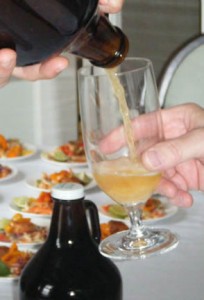
Also, since there are no individual cans housing the beer that each of your guests drink, there is less waste – and less mess – with a kegerator. No need to be cleaning up dozens of empty or half empty beer cans at the end of the party. And no need to be wasting nearly five pounds of aluminum (or glass if you would otherwise buy bottles – an even more expensive option). You can fill pitchers or growlers of beer from the kegerator, so it will be easy to pour if you have table set up for your guests.

Most people that plan an engagement party keep the party relatively informal – at least not as involved as the actual wedding reception will be. That means that having a kegerator set up in a corner so that guests can help themselves to cold beer is a great way to take care of the “bar”.

You can also have some soda and ice set up nearby for those that prefer soft drinks. Another way to keep the party informal is to have a buffet set up for the food, rather than a sit down meal. This keeps people up and mingling more and keeps the atmosphere relaxed and fun. If you don’t want to offer a full meal, finger foods that are passed around are another good option.  [Try our Guinness Slider recipe]

If you don’t like the idea of having a kegerator set up in the corner because it reminds you of old fraternity parties back in the day, don’t worry about it. For one, a kegerator is actually a refrigerator that houses the keg of beer to keep it cold, so all you will be looking at is something that looks like a mini refrigerator with a tap on top. This is a lot different than your younger days when someone might have grabbed a keg, threw it in a bucket full of ice (or a bathtub!), where there was melted ice mixing with beer all over the floor.

Instead, a kegerator offers a much more refined way to keep the beer cold and keep the keg out of sight. If you want, you can even buy a vinyl wrap to decorate the kegerator for the engagement party, or you can decorate around it yourself.

Getting engaged is an exciting time in anyone’s life and should be met with some type of celebration. Engagement parties can be lots of fun – especially if there is a kegerator placed in a strategic location to supply some great tasting, cold draft beer throughout the party. Just remember to have a great time as you celebrate the beginning of your new life together – and to drink responsibly!

Why Kegerators Can Improve Fundraiser Results

Fundraising events can be any type of event in which the primary purpose is to raise money for a specific cause, charity, organization or individual. The events can range from anything from a small get together among friends to a large formal gathering, complete with formal attire and a formal sit-down menu. But, whatever type of fundraising event is planned, and whatever the size, you’d be surprised by how much having a beer kegerator on hand can improve the results of the fundraising efforts.

Why would a kegerator filled with beer improve fundraising outcomes? The answer is pretty simple – and pretty obvious. It’s no secret that people are a bit more relaxed and open to parting with their money if they’ve had a few drinks. That’s why almost all fundraising events offer some type of alcoholic beverages during the event, and much the same reason that casinos offer free drinks to those who are gambling. That’s not to say that you should deviously aim to get people drunk at your next fundraising even so they will donate more money. It’s just that when people are out having a good time, have had a drink or two, and know that the money they donate will help a good cause, they are more likely to contribute.

If you’re holding a fundraising event at a bar, restaurant or catering establishment, chances are that there’s already a kegerator on site, dispensing draft beer. Most bars and dining establishments that have a liquor license already own a commercial kegerator that sits behind the bar. Kegerators, which are basically like refrigerators that are made to house a keg of beer and keep it cold, are a necessary appliance for any establishment that serves beer out of a keg. This is because kegs of beer not only need to be kept cold so the beer tastes good, but so the beer keeps fresh. Then a tap or two is placed on top of the kegerator or on top of the bar to dispense the beer.

If you’re organizing a fundraising event at a location that would not already have a kegerator, then you may want to consider renting one for the event. Kegerators can be rented out so you can then purchase a keg of beer and have enough alcohol flowing throughout the whole event, even if you’ve got a big crowd. Of course, beer doesn’t need to be the only type of alcoholic beverage that is served at a fundraising event, but if you’re looking to keep costs down so you can keep the amount of money that goes towards the fundraiser’s bottom line up, then beer is your best option. See how much beer you would need for your fundraiser with our Beer Calculator.

Another way that a kegerator can improve the outcome of your next fundraiser is by using it as a raffle or auction item. In this case, we’re not talking about a full sized kegerator, but rather one of the smaller mini kegerators that can be a great addition to any home. Mini kegerators are unique small appliances that house a small 5 liter mini keg of beer and can sit on top of a home bar or even a table or kitchen counter. The beer keeps cold and is dispensed through a tap, just like a real kegerator.

You can purchase a mini kegerator for around $100 – $300, depending on the model, but can then use the kegerator to get people to part with their money. Have the mini kegerator be an auction item or use it in a raffle drawing if your crowd enjoys beer. The amount of money you get in raffle tickets for the appliance or bidding may far exceed the cost to buy the appliance – and since a mini kegerator is not something that most people would think about going to a store to buy, they will enjoy bidding on such a unique novelty.

So, although it doesn’t seem like an obvious combination, kegerators, whether full sized or mini, can be a great way to add success to your next fundraising event!

Kegerator Robots

Beer and robots are a great combination. As industrial America has disappeared, industrial art and hobbies have sprung up, utilizing the tools of the bygone industrial age. Now, we can count along with the many technological wonders of the modern age, beer launching robots, beer serving robots, automated home breweries, and even robot kegerators. A beer-launching robot has even been seen on the Late Show with David Letterman.

Kegerator Robot
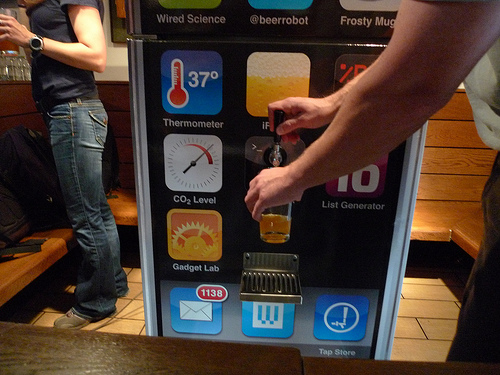
Wired has a kegerator robot that serves beer

Robot building just goes better with beer. There are few hobbies that don’t go better with beer – granted, it may make hobby more dangerous, but with danger comes excitement. With excitement, danger, and beer, usually there is blood as well. It follows naturally that roboticists making robots in there spare time, drinking beer, would make such robots as the ‘killer’ robots pictured here. These robots, the Subjugator, Drunken Master, and Spiderbot, were made by Christian Ristow in association with RoboChrist Industries.

A decline in industrial manufacturing and industry in the United States has not meant a decline in inventiveness in the United States. This is especially true when it comes to beer and robots. Coming out of the home brewing revival in the 1970s was also a revival of the D.I.Y.(Do It Yourself) mindset. It took a while for D.I.Y. beer and D.I.Y. robots to meet up, but finally, we are there. Sadly, most beer LAUNCHING robots can still only fire commercially produced canned beer, and not home brew. However, these two hobbies come very close with robots such as Wired’s Beer Robot – a robot kegerator.

The engineers over @ Yelp.com took a keg and tap, an Arduino, an RFID reader, and an iPad and turned them into an amazing kegerator robot. The device not only tracks who’s been drinking but also tracks information about the beer as it’s poured, including the temperature and ratings of recently poured drinks (so you’ll know when the keg is on a roll). They even put together a bookmarklet to monitor and track the keg remotely.


It should be noted that the recent wave of D.I.Y. robot building has even taken the term “home brew” to describe many garage style hobbies. This term is often used to describe a hobby interest that comes from a technical or industrial field, but is made at home, such as home brew computers, home brew robots, and even engines. This is further proof of the connection between beer and robots.

One great moment of inspiration and promotion of home brew robotics was when the Late Show with David Letterman had a special guest: the Beer Launching Fridge. Also, the beer launching robot’s maker, John W. Cornwell, Duke University graduate. The Beer Launching Fridge that Mr. Cornwell invented launches beer up to 20 feet, and is remote controlled. In a blog post, Mr. Cornwall expressed the possibility that he may make his Beer Launching Fridge commercially available, and with improvements: the new design would allow a user to swivel the robotic armature with the remote, effectively aiming the launcher.

The phenomenon of beer and robots is not only confined to the garage and DIY inventors. Asahi has built a little robotic bartender that stores and pours beer. This invention can be seen at the following link: http://www.youtube.com/watch?v=2tXmGYk_A_c This robot seems to be built more for cuteness than efficiency, though. It takes about three and a half minutes for it to pour a beer, and it spills some, too.

One great take on the beer launcher is a mechanical unit which is foot pump operated. The ‘Ultimate Tailgating Machine’ holds 12 cans of beer and was the final group project for three student of a Design Class at U of I. See it in action at the following link: http://www.youtube.com/watch?v=LCIGIe2T4j0 Brought to the world by Dan Larson, Justin Tobin, and Steve Walker.

As we can see, beer, kegerators and robotics are a great combination, with potential for great fun.

Hopworks Draft Beer Bike: Oregon Bike Culture

Hopworks Draft Beer Bike

Hopworks is a brewpub based in Portland, Oregon. Oregon is known for good beer and bikes, and Christian Ettinger, Owner & Brewmaster of Hopworks urban brewery, has combined those along with a determined commitment to sustainable brewing in all of his business endeavors with Hopworks. The Hopworks draft beer bike is a prime example of this commitment, a mobile, pedal-powered bar used to promote this business at beer festivals, street fairs, and other special events.

From the state of Oregon comes some of the most highly rated commercially available microbrews in the world. Rogue Brewery is well known as well as scores of smaller operations, such as Deschutes Brewery, Full Sail Brewing, and Captured! by Porches. Perhaps it has something to do with the great amount of fine hops that grow throughout the Cascadia region.

Oregon is also host to quite a few bicycle enthusiasts. Many clubs are operational in Oregon, including mutant bicycle clubs such as a chapter of the Black Label Bike Club, C.H.V.C.K.E.N. 666, and old-school club from Portland, Chunk 666 bike club. These bike clubs build all sorts of mutant bicycles such as tall bikes (made from two bike frames welded together vertically), flame-throwing bikes, and lawn-mower bikes. Here, you can see a mutant tricycle built by Dingo Dizmal, formerly of the Alberta Street Clown House (now gentrified out of existence in Portland, OR):

With such an inspiring beer and bike scene, it is no wonder that Hopworks’ sustainable choice for promoting their beer was a custom bicycle bar. Hopworks Urban Brewery incorporates many aspects of thoughtful, efficient sustainability in their operation, including composting and rain barrels for rain water catchment. According to the Hopworks website, “Hopworks is 100% renewably powered and “cradle to gate” carbon neutral.” Although CO2 (Carbon Dioxide) emissions may contribute to climate change (used to be called global warming, but you must use the current terminology), additional CO2 definitely helps the hops and barley grow. Still, the Hopworks commitment to an ecologically clean operation is admirable as they pump out roughly 6,000 gallons of beer each year.

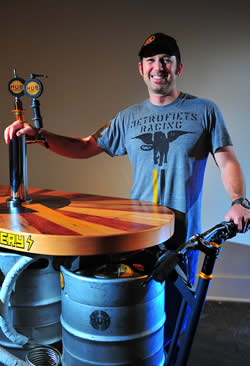
The Hopworks Beer Bike is a modified cargo bike that holds two kegs, two custom taps, a flat bar, sound system, and a rack that can hold three large pizzas! The bike itself was built by Portland, Oregon based Metrofiets. Mertofiets specializes in the building of custom cargo bikes, based upon Danish and Dutch cargo bikes with aesthetics melded from 1940s through 1960s American Bicycle designs. Their work is artisan quality, and Metrofiets has made more than one brew serving cargo bike – they also made the mobile coffee bike for Trailhead coffee roasters.

The Hopworks Beer Bike has appeared at many festivals and beer events in Portland, and always gets a lot of attention wherever it goes. This can be attested to by this discovery channel link  And from Make Online:

Breweriana: Treasure Hunter's Guide to Nostalgic Collectibles from the World of Beer

Breweriana has been come to be known as the collectable detritus of brewing’s past. The term breweriana first appeared in the U.S. as the 1972 founding of the National Association of Breweriana Advertising. Most beer fans consider old beer signs, neon signs, advertising bills, old rusty beer cans, pint glasses, t-shirts, patches, or anything with a brewery’s logo on it to be breweriana. The collectiblility potential of breweriana is easy to see – some people have been able to make a great deal of money through the sale of breweriana antiques.

Breweriana is a popular field of collectables for a couple of reasons. Firstly, as with most collectables, is nostalgia. To determine the nostalgic value of an item you must look at how trivial items play through history. The item must also be authentic to be worth much. Knock off nostalgia items tend to break the spell of nostalgia eventually. As with other fields, in the area of breweriana, it is important to look at discontinued items.

Another reason why it may be profitable to trade in breweriana is that many bars look for these ancient items when assembling their décor. If you run across a big sign or neon from an antique dealer or scrapyard hustler, you might be able to turn a profit by inquiring at local pubs and the hipper dive bars. The antique décor motif is one used in curiosity shops, bars, and even big chain stores like the cracker barrel.

When looking at breweriana, it is a good idea to find out about the location of the brewery that first created the breweriana. Regionally, breweriana from closed down and defunct breweries is more valuable than it is nationally. This is because more people recognize the name brand of their once-local brewery or brewpub. It is a good bet that an old beer sign can fetch a better price in the state that it was originally displayed.

There are many folks that collect beer cans and bottles from the past. These items must be handled with care, as the beer contained within (if any) has often undergone a hideous transformation. Most collectors drill a small hole in the bottom of the can and drain the sometimes-noxious contents before setting the collectable on the shelf. Bottle caps can be pried off carefully and re-applied to achieve the same effect.

Keep a look out for older cans. Cone tops, crowntainers, and flattops are among the most valuable. Cone tops and crowntainers both have a cone like top, which was usually capped with what we cap bottle caps these days. Flattops had no tab and required a bottle opener to get at the beer inside. “Instructionals” is the term for flattops that have instructions for opening listed on the side of the can.

Some of these cans, the earliest from the Krueger Company, required their own can openers. Flattops had no tab and required a bottle opener to get at the beer inside. The "flattops" needed a regular can opener, the sharp lever-pry type. Some of these collectibles (the openers) are usually formed from a piece of steel rod which loops around and is about 5-6 inches long. Usually the beer can openers have a stamp from the beer manufacturer. One of the more popular pieces of breweriana among private collectors is the crown, or bottle cap. Bottle caps were initially manufactured in the 1890’s. Those that survived through prohibition are the hardest to find, and most of those are from defunct breweries.

Beer signs, or even posters, are another hot item, mostly because they are sought after by bars and pubs to add to their décor. Some older signs look like posters but have been printed on sheet metal. We can see reproductions of these items out on the market as well, such as the old Guinness mascot, the beer-swilling Toucan. The original designs are worth a lot, not so much for the reproductions.

When looking for breweriana, make sure you know what you are looking at. There are many books out on the subject now, such as Beer Signs for the Collector and the Beer Advertising Memorabilia series. A visit to Amazon.com or your local library will give you some insight on this field of antiques.

See related:
Breweriana: Collectible Beer Signs
Breweriana: Collectible Pint Glasses
Breweriana: Specialty Beer Glasses
Breweriana: Collectible Beer Steins

Extreme Kegerators

There’s a new trend taking place amongst kegerator builders that is taking some of their designs to the extreme. Bigger, faster, stronger is the American way and so why not apply that to the modern kegerator? Well here is a few of the extreme kegerators we have been seeing lately that are likely to spawn a whole new way of thinking when it comes to drinking draft beer from a kegerator.

Kegerator Cabinet

Garage Tool Cabinet Kegerators
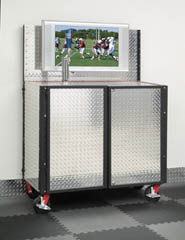
If you were out shopping for a new tool cabinet for your garage you would expect to find features like durable chrome plating or rolling casters, but would a kegerator be an upgrade you would be interested in? Garage Fabricators from Central California thinks it should be. They’ve created the Diamond Plate Kegerator Cabinet that comes fully loaded including powdercoated steel plating and welded 6" phenolic casters. The kegerator cabinet is 23.5” deep x 47.5” wide x 64” tall and has the option of a Flatscreen TV mount. For only $1,678.57 you can call one of these kegerator cabinets your own.

Arcade Kegerator

Arcade Machine Kegerators
Whether its Pac-Man or Mario Brothers, imagine having access to fresh draft beer while playing your favorite arcade games. Well, two companies we’ve found seem to have the same idea. The Custom Bar Guys in Roanoke, VA have created THE GAMERATOR. The Gamerator offers access to over 1,000 classic and current arcade games and a refrigerated interior capable of holding a pony keg of draft beer. A device this unique is surely worth the $3,995.00 price tag, so order yours today, as they are handmade upon order and take up to 4 weeks to build.

Racing Arcade Kegerator

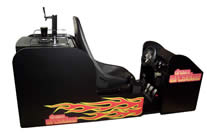
Another company integrating a beer experience for gamers is Dream Arcades out of Folsom, CA. They have created a racing arcade kegerator entitled the Octane 120 Beer Arcade. The Octane 120 is a home arcade gaming system that combines three things every adult gamer wants: classic arcade games, arcade-style racing, and a full sized kegerator with in-dash beer tap to get your favorite beverage without having to get out of the seat. Only $6995 (S+H) and it’s all yours!

Hitch Mount Kegerator

Hitch Mount Kegerator
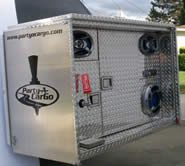
California companies seem to be all over the extreme kegerator setups and Party-A-CarGo out of Concord, CA is no exception. They have put together a hitch mounted kegerator / entertainment system. Tailgaters, campers, or weekend warriors can pour up to 160 ice cold beers, play 12 hours of music and watch the early games on TV without having to recharge their battery, refill their cooler with ice or clean up empty beer cans. Check out Party-A-CarGo to get all the details on this extreme kegerator.

Evolution of the Beer Keg

From wooden casks to stainless steel and aluminum, from spile and shive to Sanke tap, the evolution of the beer keg has also influenced the evolution of beer. Driven by the mass production demanded by beer fans the world over, brewers have tinkered with and improved the beer keg in many ways during its evolution. Some of these changes have also impacted the quality of beer and even the brewing process. Though the old style cask ales, or “real ales” are still in production in some parts of England and the U.S., modern beer is dominated, even in the microbrew and craft beer markets, by pasteurized and filtered beers. Here we will look at the evolution of the beer keg and the effect mass production has had on the beer it has kegged.

Evolution of the Beer Keg

History shows us that the drinking of beer goes back at least 4,000 years. In that time, beer was most likely stored in clay urns and pots. But somewhere along the line, humans discovered that beer could be carbonated by sealing it in a bottle or cask and letting the yeasty “spirits” or “miracles” of fermentation go about their business. With this discovery came the first beer keg.

As far as historical records go, we can see a lot of light shed on the development of beer in Europe. Originally, European beer, i.e., beer-as-we-know-it-now, was predominantly kegged in wooden casks. These casks were usually made of oak or other hardwoods that had a reputation for being non-toxic. Beer at this time was un-pasteurized and usually unfiltered, which lent it to spoiling. This beer had an expiration date!

Most of the advances in brewing and kegging technology since then have focused on increasing the life span of beer. The most important of these was the process of pasteurization. Pasteurization is a process by which a product in a bottle or can is rapidly heated and then cooled. This process ensures that any organism that may be purposely or un-purposely left in the product (in this case, the beer keg) is killed. Through the use of pasteurization, beer kegs have been granted a much longer shelf life.

For some, the change in taste that the pasteurization process yields is too much to ask for the benefits of increased shelf life. An organization known as CAMRA, the CAMpaign for Real Ale, has taken up the cause of un-pasteurized and un-filtered beer. Through this group, folks interested in cask ales and real ales may find them in the U.K. Interest in cask ales is present in the U.S. as well, although the term real ale does not have the same weight as in the U.K., where strict guidelines have been established. Real ales are those ales that are still “alive” with living yeast. Cask ales are ales that are served from a cask, although not necessarily a traditional wooden one. These ales may be filtered, but they are usually cask-conditioned. This means that they gain their fizzy carbonation through the natural process of fermentation instead o the “force-carbonating” that is usually done by commercial beer makers.

The modern Sanke beer keg is designed to be rugged, easily cleaned (at least with the right industrial keg cleaning machines, and to hold a great amount of beer while still being light enough to be handled by one person. Unlike the cask, the progenitor of the keg, the Sanke keg requires little preparation and knowledge to operate. Sanke kegs took the Shive hole and the keystone of casks and put them into the same hole, locked in with a coil spring and valve, released with the push of the tap once attached.

Today, most cask ales are served from steel or aluminum casks, just as regular beer kegs are. They still require the care of an attentive landlord or barkeep, however. The gas must be vented and the beer prepared two to three days ahead of time. The benefit of a little extra tooling and care produces the result of an ale the likes of which might have been enjoyed 2,000 years ago! For all the modern influence of technology on brewing, it is refreshing to see that some people still like to do things the old fashioned way.

See related keg beer articles: History of the Kegerator, Beer Keg Directory, Beer Kegging Tutorial

Beer Trends: Women Drinking Beer

Many men consider the world of beer to be a masculine realm, and these many men are increasingly more mistaken.  With the variety and taste sensations offered by the golden age of microbrew, many women are becoming more acquainted with the pleasures of drinking beer.  In addition to the trend of women increasingly drinking beer, some medical studies have shown that, for women, drinking moderately can help fight high blood pressure and cholesterol.

Woman Drinking Beer

Although the beer market is still mostly a male demographic, beer analysts are realizing that up to 30 percent of the market is actually made up of female beer drinkers.  As of 2005, London based research firm Datamonitor has reported that low carb and light beers are driving greater beer consumption in U.S. women.  Some beer companies have even launched specific lines of beer to appeal to women, such as Heineken’s new malt cider Charli, and Poland’s Karmi.  Beer advertisers are noticing this trend as well.  A 30 percent market share cannot be ignored, and the public has already seen a shift in the content of beer ads.

Women are also drinking a lot of micro brewed beer.  According to a National Restaurant Association survey, about half of women are ordering microbrews when eating out.  Microbrewers must be even more aware of this trend in beer than industrial brewers.
 
For some women, it has been clinically proven that moderate drinking can have health benefits.  Two studies published by the Archives of Internal Medicine and the American Journal of Clinical Nutrition support this claim in different ways.  The first study found that younger women who drink an average of two to three alcoholic beverages weekly have a lower risk of having high blood pressure than those who do not drink.  This study used 70,000 women aged between 25 and 42 years old.  The study tracked the women’s health from 1989 until 2002, and found that women had a 14 percent less chance of having high blood pressure problems. 

The second study, the one published by the American Journal of Clinical Nutrition, focused on older women, 51 of them, who were aged above 60 years old.  The women’s diets were all strictly controlled. This study found that alcohol could lower cholesterol, but only if only one or two drinks were taken in a day.  The women were given strict dietary plans, including either a zero, one, or two-drink quota per day.  The health benefits showed up for the single drink group, but dropped off for the two-drink group.

With studies like these enhancing the trends already present in the category of women drinking beer, we can see that it is only more likely that this trend will continue.

But one Canadian study showed some slightly dismaying aspect for women drinking beer: "My study suggests that sober women who drink alcohol are less able to perceive facial symmetry when sober," said Dr Kirsten Oinonen, Dr. at Lakehead University in Canada,

"When sober, these women are worse at judging facial symmetry, and therefore may find less attractive men more attractive. Given that symmetry is associated with attractiveness of faces, my study does suggest the possibility that alcohol intoxication may decrease facial symmetry perception, and make people look more attractive."


It seems that scientists in Canada have found the technical term for the curious phenomenon commonly known as "beer goggles".