Beer Trends: Women Drinking Beer

Many men consider the world of beer to be a masculine realm, and these many men are increasingly more mistaken.  With the variety and taste sensations offered by the golden age of microbrew, many women are becoming more acquainted with the pleasures of drinking beer.  In addition to the trend of women increasingly drinking beer, some medical studies have shown that, for women, drinking moderately can help fight high blood pressure and cholesterol.

Woman Drinking Beer

Although the beer market is still mostly a male demographic, beer analysts are realizing that up to 30 percent of the market is actually made up of female beer drinkers.  As of 2005, London based research firm Datamonitor has reported that low carb and light beers are driving greater beer consumption in U.S. women.  Some beer companies have even launched specific lines of beer to appeal to women, such as Heineken’s new malt cider Charli, and Poland’s Karmi.  Beer advertisers are noticing this trend as well.  A 30 percent market share cannot be ignored, and the public has already seen a shift in the content of beer ads.

Women are also drinking a lot of micro brewed beer.  According to a National Restaurant Association survey, about half of women are ordering microbrews when eating out.  Microbrewers must be even more aware of this trend in beer than industrial brewers.
 
For some women, it has been clinically proven that moderate drinking can have health benefits.  Two studies published by the Archives of Internal Medicine and the American Journal of Clinical Nutrition support this claim in different ways.  The first study found that younger women who drink an average of two to three alcoholic beverages weekly have a lower risk of having high blood pressure than those who do not drink.  This study used 70,000 women aged between 25 and 42 years old.  The study tracked the women’s health from 1989 until 2002, and found that women had a 14 percent less chance of having high blood pressure problems. 

The second study, the one published by the American Journal of Clinical Nutrition, focused on older women, 51 of them, who were aged above 60 years old.  The women’s diets were all strictly controlled. This study found that alcohol could lower cholesterol, but only if only one or two drinks were taken in a day.  The women were given strict dietary plans, including either a zero, one, or two-drink quota per day.  The health benefits showed up for the single drink group, but dropped off for the two-drink group.

With studies like these enhancing the trends already present in the category of women drinking beer, we can see that it is only more likely that this trend will continue.

But one Canadian study showed some slightly dismaying aspect for women drinking beer: "My study suggests that sober women who drink alcohol are less able to perceive facial symmetry when sober," said Dr Kirsten Oinonen, Dr. at Lakehead University in Canada,

"When sober, these women are worse at judging facial symmetry, and therefore may find less attractive men more attractive. Given that symmetry is associated with attractiveness of faces, my study does suggest the possibility that alcohol intoxication may decrease facial symmetry perception, and make people look more attractive."


It seems that scientists in Canada have found the technical term for the curious phenomenon commonly known as "beer goggles".
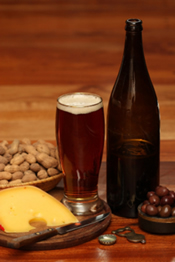
9 Beer And Cheese Pairings

Beer and Cheese Pairing

Cheese has traditionally been paired with wine, fruits, nuts or things like marinated olives, but recently with rise of Craft Beer in America we have been noticing more and more brew pubs and bars offering beer and cheese pairings. These beer and cheese pairings include high end cheeses and craft beers that can compliment each other in a new way. Anything from Goat to Gouda cheese and Wit to Wheat beers, it’s all fair game in the new playing field of beer and cheese pairing.

The following are 9 beer and cheese pairings that will excite your palate and bring forward flavors in the beer and cheese you probably have never tasted before.

Beer and Cheese Pairings

Vella Dry Jack
The Vella Cheese Company of California created this cheese by taking Monteray Jack and aging it another 7-10 months, until it hardened. The result is a firm, pale yellow cheese with a sweet nutty flavor.

Pairs well with: Stout, porter, dopplebock, strong ale, brown ale, Oktoberfest

Manchego, 3 mo.
This Spanish sheep’s milk cheese has a milder flavor and softer texture than older versions. A good blend of salty and nutty flavors, sweet hints, and buttery taste.

Pairs well with: Blonde ale, witbier, wheat beer

Danish Blue Cheese
A sharp and spicy, full-flavored blue with a dry texture and dark blue-green veining.

Pairs well with: Stout (especially imperial), porter, IPA, barleywine, strong or old ale

White Cheddar, 3 yr.
Made from raw milk and aged for 3 years, white cheddar has a sharp, robust, tangy flavor.

Pairs well with: IPA, stout, pale ale, amber ale

Smoked Gouda
Similiar to Edam except that it contains more milkfat, this cheese is sweet and smoky on the tongue. The edible brown rind is an indication that it is smoked.

Pairs well with: Amber ale, rye ale, brown ale, Oktoberfest, IPA, Vienna lager, porter

Traditional Hoop Cheddar
A mild yellow cheddar (best are from Wisconsin)made in the traditional way by hand-packing fresh cheddar curds into wheels and aging in red wax.

Pairs well with: Pale ale, any Belgian ale, strong ale, ESB, pilsner, dopplebock

French Brie
A soft cow’s milk cheese with a distinctive rich, creamy flavor.

Pairs well with: wheat beer, tripel, kolsh, witbier/white ale, blonde ale, pilsner

Cotswold
This is a full-flavored, creamy, whole milk cheese, similiar to cheddar, to which chopped onions and chives have been added. It is golden yellow to orange in color.

Pairs well with: Rye ale, kolsh, blonde ale, IPA, stout, amber ale, pale ale

Laura Chenel Chèvre
A classic American goat cheese with a clean fresh taste, more dry than tangy, and a bit crumbly.

Pairs well with: Kolsh, witbier, wheat beer, brown ale, ESB

Bohemian Black vs. Blackened Voodoo

A Comparative Analysis of Black Lagers

Lagers are clearly one of, if not THE most popular beer style in the world. Lagers have become popular enough that many sub varieties have developed. Around the world, you will find beer fans that prefer their favorite style, be that the American-style lager, the Bock, the Dunkel, the Helles, Märzen, Pilsner, Schwarzbier, or Vienna lager. Of the lagers commercially available, I have always preferred the darker varieties including the Bock, Dunkel, and especially Schwarzbier, or black lager in United States parlance. Here I’ll take you through a tasty comparison of my two favorite commercially produced black lagers, or Schwartzbiers, Dixie Brewing Company’s Blackened Voodoo Lager and Shiner’s Bohemian Black Lager.

Black Lagers

Dixie Brewing Company’s Blackened Voodoo Lager was a rare treat I enjoyed with falafel dinners when I was living in Berkeley, CA. This lager was a long way from it’s home brewery in New Orleans, LA, and didn’t suffer from it. It was even more rare after Hurricane Katrina hit New Orleans hard, but now Dixie brewing company is back at it, although the company has subcontracted out some of its brews while recovering and rebuilding from Katrina.

The Blackened Voodoo lager is light and crisp, with a distinct flavor of the chocolaty elements of its dark-roasted barley malts. The hops add what I would call a medium bittering element to the beer, with subtly musky flavorful aftertastes that arise from the mix of the dark roasted malts and the hops mingling. The hops used in this beer’s production are Mt. Hood and Cascade hops. The yeast flavor is very sublte in this beer, just adding the slightest of fruity accents on the aftertaste, which I consider to be a mark of patience in brewing and proper lagering. The body qualifies as on the heavier side of the medium range, which to me seems a bit light for a black lager. 

For some reason, I always find myself remembering how well this beer went with the Mediterranean food that accompanied my first experience with it. The Blackened Voodoo lager was especially effective at clearing the palate with its somewhat dry yet solid flavors and crisp carbonation. The alcohol level is 4.7%, a level at which the taste of the alcohol is easily overcome by the flavorful nature of the brew. A fine brew to cool off with after a long days work in the hot sun (or even the hot shade, in Louisiana!).

Shiner’s Bohemian Black is a fairly recent addition onto the Texas beer scene, and a welcome one. Shiner’s Bohemian Black was originally a limited edition produced in honor of the Spoetzl Brewery’s 97th anniversary, but it’s popularity earned it a continued production run as a permanent part of the Shiner line of beers in 2007. This Black lager is very refreshing on a hot day, much like the Blackened Voodoo Lager. Shiner’s Schwarzbier has a sweeter taste, even with it’s slightly elevated alcohol level (4.9%). The darkly roasted grains seem to impart more body into the Bohemian Black without so much of the chocolaty taste that I found in the Blackened Voodoo Lager. The hop character, once again, seems meant to embolden the bitter aspects of the malts rather than hit you over the head with hoppy dankness. I would call the Bohemian Black a smoother lager, with more body than the Blackened Voodoo. Less carbonation is evident in this beer as well.

One aspect of the Bohemian Black which is clearly enhanced over the Blackened Voodoo Lager is consistency. I have never heard of a complaint about the Bohemian Black, but it seems that the Blackened Voodoo Lager can have some variety regarding carbonation and flavor. My guess would be that the lager may be subject to alteration depending on temperature changes. Also, with the advent of hurricane Katrina, the Dixie Brewing Company has contracted out some of their brewing, including Blackened Voodoo Lager, to Minhaus Craft Brewery of Wisconsin. This might cause some problems, as the new brewery must adjust its apparatus to attain the same results as the New Orleans brewery.

If you are a lager fan, I recommend trying both for yourself. Shiner’s Bohemian Black will most likely be much easier to find. If you should stumble upon the Blackened Voodoo Lager, you should definitely pick up a six pack, because you never know where or when you might see it next!

5 Social Networks For Beer Lovers

Beer Social Networks

In the wondrous age of the interweb, we have seen many strange, amazing, and annoying trends. One trend that encompasses all of these traits is the concept of social networking websites. Sites like myspace, verb, tribe.net, facebook, hi-5, the list goes on and on.

It becomes so hard to choose with hundreds of websites trying hard get your whole life listed in their database. It makes me wonder, sometimes- why would ANYONE want EVERYONE on the web to be able to know EVERYTHING about their self? It seems as though too many people don’t take the time to consider this. I’ve just got to put this out there before I encourage anyone to join yet another social networking website. I am a fan of disclaimers.

Social networking on beer gives me more hope than social networking just for social networking’s sake (gah!). With a highly focused topic, it is clear that a social networking site about beer can be a good thing. This is true of the many beer forums as well. Such sites can help a lot of beer fans to better understand the craft of brewing and the wide spectrum of flavors accessible in the beer universe. I still wouldn’t suggest that you sign up for anything with your actual email address, unless you just luuuuv spam. And I’m not suggesting you use your grandma’s email address either. Just make one up that you will never use again except to get confirmed at the beer social networking website you are checking out.

One site that strikes me right off the bat as a good resource is the homebrew wiki (reachable at http://www.homebrewtalk.com/wiki). This site and wikipedia (http://www.wikipedia.org) are both veritable treasure troves of information regarding beer, wine, mead, and basically any fermented or distilled beverage. You can find info about virtually every type of beer as well as the history of beer. Before entering the forums and social networking sites about beer, I suggest taking a surf through the wikipedia or homebrew wiki search engines.

BrewPoll.com

Now, as far as actual social networking sites, I must say that I was initially attracted to brewpoll.com through their affiliate website beersmith.com. Beersmith.com offers a free trial of their Beersmith software, a program that helps homebrewers to determine what ingredients to use for their recipes, accounting for price and amount of beer to be made, among other factors, and offers a brew calendar and reminders, too. Brewpoll.com is itself a “Digg-Like” news site where home brewers and craft beer fans can share and gather news. A voting system allows members to catapult relevant and useful articles to the top of the lists. Since this site links to “news” stories from other sites, it offers a chance to search a wide array of topics and beer making tutorials.

This site will probably be quite useful if you are a home brewer with some specific questions, like this one: Should I put olive oil in my beer? I had never thought of that on my own, but some brewers at New Belgium brewery have tried it and I found their results on brewpoll via fermentarium.com!

MustLoveBeer.com

Another social networking site on beer is mustlovebeer.com. Although it is a fairly young site with few members, it is equipped with many myspace-like features, such as extensive profile information, profile pictures, room for uploading pictures, messages, and friends. This site seems somewhat desolate at this time, but if you have friends a long way away that you want to keep in touch with, it might be a good way to do so while also meeting other beer fans with similar interests… in time. The site only seems to have 200 members or less, from what I have seen poking around on it.

RealBeer.com

Although it is not, in the strictest sense, a social networking site, realbeer.com is a fun site for information about beer. I recommend visiting this site if you are just “surfing the web” to find out interesting news flying about in the beer world, funny stories, and the like. I discovered three great stories just on one visit: a “Bones & Brew” Zoo benefit in Oregon put on by Rogue brewery, 2,000 pints of ale mis-delivered to Windsor Castle, and a historical mis-quote attributed to Ben Franklin. These were just some of the top stories on this site.

HomeBrewTalk.com

Homebrewtalk.com is a very active site which has social networking applications. This site is full of articles, recipes, updates on new equipment, and many stories about home built beer making set-ups, kegerators, and beer interest stories too. The site is funded by its members and some advertising, so they ask all members to consider upgrading accounts to either yearly or lifetime memberships ($25 a year or flat $100). Basic memberships are offered for free, however.

BeerJunction.com

Homebrewtalk.com is a very active site which has social networking applications. This site is full of articles, recipes, updates on new equipment, and many stories about home built beer making set-ups, kegerators, and beer interest stories too. The site is funded by its members and some advertising, so they ask all members to consider upgrading accounts to either yearly or lifetime memberships ($25 a year or flat $100). Basic memberships are offered for free, however.

BeerJunction.com

BeerJunction.com is a new social networking site for beer lovers that seems to focus more on sharing the love of home brewing. You can create a profile and log all of your brewing in a personal blog. One cool feature is the ability to add pictures, video and create your own groups. This community is handy for home brewers, or home brew clubs, or someone who really loves beer and wants to create a network of friends that love the same.

With this basic overview of sites, you should be able to have most of you questions and queries answered. By gaining membership with these social networking sites on beer, you can certainly find more people who may be able to answer any questions you have about beer.

The Demand for Microbrews in a Competitive Market

Many are amazed at the head of steam the trend of good, quality beer has built up in recent years.  For many home brew entrepreneurs, the increasing demand for microbrews and quality beers has made their dreams come true.  The market seems to show little sign of slowing down.  More and more breweries are opening every year at the craft and microbrew level, and even the big companies are trying to compete and keep their formidable chunk of the beer market.  Well, there will always be those who want the cheapest of schwill.  But more and more people want something more out of their beer: nutrition, flavor, and real tradition.

New Belgium

Let’s start with some definitions.  Microbreweries are considered those breweries that produce less than 15,000 barrels a year.  Microbrews also tend to focus on producing the highest quality beer, and in the U.S., this also qualifies most of them as craft breweries.  Unlike bigger breweries, the eye towards quality means that beer is actually made with real barley, hops, and yeast.  The addition of rice and corn found in the cheapest schwill are not found in microbrews.  Although this means an increased cost of up to 60% that of mainstream beers, microbrews manage to do quite well in a consistently shrinking beer market.  Microbrew sales consistently have risen 40% in recent years, with new breweries popping up with regionally-based fans all over the country.  In order to study the methods of the micro breweries success, lets look at one of the biggest success stories.

One beer manufacturer that has risen above the qualifier for microbrews while still maintaining its craft brewery status is New Belgium.  With its very popular flagship beer, Fat Tire, New Belgium has continued in the tradition of craft brewing excellence, even while exponentially increasing its production.  For those interested in the business of beer, New Belgium is a great company to study.  With well-studied brewing expertise they have managed time and time again to upgrade their brewery production without sacrificing quality.

One undeniable aspect of New Belgium’s success is ingenuity and green production techniques.  With a commitment to sustainable production methods, New Belgium has merged ideology with efficiency and some crackin’ good outside the box thinking.  Since 1999, the New Belgium brewery has been powered from 100% renewable energy sources.  30% of the energy that is used to manufacture is harvested from the biodegradation of their own spent grains, and the rest comes from wind power, bought off the grid of the power company with specific earmarking for wind farms.  With other companies scrambling to attain the reputation of being “green”, New Belgium is an example of authentic green thinking and how well green marketing can work if it isn’t just all talk.

Perhaps one reason why New Belgium has been able to achieve such success is that the company is, in a large part, owned by its operators.  After only one year working for New Belgium, employees are given part ownership of the company and a brand new shiny red bicycle.  One aspect of their business which struck me as phenomenal, was their transparent finances policy.  According to their website:

“And, like all responsible business owners, it’s important to know your bottom line, barrels, and books. Meet New Belgium’s practice of open-book management: a policy of fiscal transparency throughout the company that encourages a community of trust and mutual responsibility.”

It seems that finally, there is a precedent for honesty, ingenuity, and integrity in successful business.

In an ever expanding market, it only makes sense that microbreweries are a good investment choice, even in the troubling times of today’s economy.  Even in the toughest of times, people of all economic strata seldom give up the solace of a fine beer.  But more than that, craft brewing is part of a culture that honors fair dealing, hard work, and cultural tradition.  All of this is evident in the policies of one of the most successful craft breweries of the last 20 years – and it can happen again, maybe for you.

Related article: Kegerators.com’s Top 5 Names in Domestic Beer

Beer of Fire: When Barley and Peppers Mix

With the advent of the golden age of microbrews, we are constantly seeing new and inventive beers. One of these beer combinations is the mixture of beer with peppers, especially Chipotle chilis. Rogue brewery’s Mexicali or Chipotle beer, and Cave Creek’s Chili Beer are two examples of commercially produced “beers of fire”. Looking online, you can see that home brewers have been eager to take up the challenge of brewing with Chipotle and other peppers, peppering discussion forums with chat and recipes for beer of fire. Here is a new frontier for beer brewers around the world.

Beer of Fire

The best of the new chili beers that is commercially available, in my opinion, is Rogue brewery’s concoction. A delightful spiciness is added onto an already solid beer. This is the perfect example of a well crafted beer of fire. The beer was originally called Mexicali, but now the name is the more descriptive Chipotle Beer. The base of the beer is Rogue’s Amber Ale. The Amber Ale comes out a rich amber color with a medium amount of carbonation. The flavor normally has a nice maltiness to it, somewhat sweet, but in the Chipotle beer, the malt and hop flavors seem subdued. The result is your ability to really taste the Chipotle as the smoky flavor of the pepper mixes with the flavors of the malt.

Rogue’s Chipotle beer was inspired and remains dedicated to Spanish author Juan de la Cueva. La Cueva wrote in 1575 of a Mexican dish that combined seedless chipotles with beer. Rogue recommends a tasty combination on their website: blend the Chipotle beer with Rogue Chocolate Stout to create a Mole black and tan!

Cave Creek’s Chili Beer is a far lighter offering from the state of Arizona. This beer is the invention of “Crazy Ed” who claims his inspiration comes from being annoyed by yuppies. According to Cave Creek’s website:

“…in 1989, he started brewing his own beer. The town was suspicious. And became even more so when an entire brewery arrived in crates at the foot of Black Mountain, along with a German named Arnold. But after the first batch the people began to come around. The beer was good, damn good, So good in fact, the yuppies started driving in from all over to try it.  Something had to be done, So , whenever one of them whined for a "wedge of lime" Ed started putting a hot Serrano chili pepper into the beer instead. Amazingly, about 2 out of ten actually liked the stuff.”

Cave Creek’s Chili Beer is made in the small town of Tecate, Mexico, where it seems that Crazy Ed and his pals drop a jalapeno into a beer bottle and then fill it with “a fine Mexican lager beer”. The way the wording is displayed, I wonder if it is the same beer that Crazy Ed used to make….

One place where beer with chilis is not new is Mexico. For a long time, beer fans in Mexico have enjoyed a beer cocktail called the michelada. This is another way to enjoy the mix of barley and peppers. Lime juice and chili powder are added to a regular beer of your choosing to make the michelada. If you have been wondering about micheladas, and the new beers coming out with lime juice or chili and lime, now you know! Although brewing with chilis has been a successful prospect so far, I hazard to state that fresh lime juice must surpass any manufactured lime juice substitute that may be coming out in beers like Miller’s Lime and Salt beer and Anheiser-Busch’s Lime flavored beer.

BREW YOUR OWN

  1. For the home brewer interested in experimenting with Chipotle beer, I recommend first brewing a fine chocolate stout.
  2. After racking, take the stout and fill three one gallon jars halfway with your stout.!
  3. Now, prepare your chipotles. You should put them into a strainer, be sure to remove the seeds (the spiciest part), and pour boiling water over them to soften them up and sanitize them a little. Add one, two, and three chipotles to the three separate bottles.!
  4. After two weeks, strain out the peppers, bottle, and label.!
  5. You now have one, two, and three pepper rating Chipotle Chocolate Stout! See how much spice you can handle!

Kegerators.com's Top 5 Names in Domestic Beer

The U.S. beer industry is in a constant state of flux. New ideas and innovations are changing the face of beer every year, especially in the micro brew market. As the primary field of growth in the brewing industry, kegerators.com will name the top ten names in domestic craft beer production. These are names to look out for. These are brewers associated with quality, ingenuity, tradition, social responsibility, and most of all, good tasting beer. For these qualities, we name New Belgium Brewing Company (Fort Collins, Colorado), Dogfish Head Brewing Company (Rehoboth Beach, Delaware), Spoetzl Brewery (Shiner, Texas), Rogue Ales (Newport, Oregon) and St. Arnolds Brewery (Houston, Texas).

New Belgium Brewery New Belgium Brewery of Fort Collin, Colorado, is here honored for the company’s integrity, ingenuity, and the amazing quality of its high production level brewery. A forward thinking, 100% green company which shares its profits with its workers, New Belgium has consistently contributed innovative brewery techniques, while at the same time maintaining ancient and venerated beer traditions, such as its 1554 Enlightened Black Ale. Kudos to the first beer company to recycle its waste grain and harvest methane from it! This full circle renewable energy source now contributes 30% of the energy required to produce over 450,000 barrels of beer annually.

Dogfish Head Brewing Company Dogfish Head Brewing Company, a smaller brewer located in Rehoboth Beach, Delaware, is here honored for ingenuity and fearless experimentation in the realm of brewing. These brewers have gone where few dare to go, preparing beers of up to 18% A.P.V.! Using admixtures such as raspberries, raisins, blueberries, chicory, and coffee, Dogfish Head has prepared some mighty interesting and mighty tasty concoctions. Brewers of the Midas Touch, Dogfish Head has even created a facsimile of a brew scientists discovered only traces of on urns in King Midas’ tomb. A true blend of tradition and experimentation. But you’ll have to go to Delaware to sample some of their latest innovations: small scale craft spirits!

Spoetzl Brewery, of Shiner Spoetzl Brewery, of Shiner, Texas, is a middle-sized brewery (much bigger than a microbrewery at 300,000+ barrels per year) that has, just in recent years, ventured into the craft beer market. Spoetzl is here honored for returning to the craft beer traditions from the precipice of the homogenized U.S. beer fad. For many years, the Spoetzl Brewery kept mainly their Shiner beer going, but now has distribution for many craft beers, in addition to their rather main-stream tasting Shiner and Shiner light. All of this is, in part, to Shiner’s centennial beer program, which started in 2005. The centennial program began producing one special edition beer in small batches at the end of each quarter. With this foray into the realm of experimentation, the brewers at the Spoetzl Brewery found flavors that were received quite favorably. Spoetzl’s Shiner 96 Märzen Ale, Shiner 97 Bohemian Black Lager, Shiner 98 Bavarian Style Amber, and Shiner 99 Munich Style Helles Lager, are all high quality craft beers worthy of recognition along-side the best microbrews of the day.

Rogue Ales Rogue Ales, of Newport, Oregon is a brewery which has maintained an exacting level of perfection with its recipes while keeping an open mind toward new innovations in brewing. With brews as diverse as Soba, Hazelnut Brown Nectar, and the Juniper Pale Ale, Rogue has demonstrated it’s willingness to live up to its namesake. Yet still, for all this invention, Rogue beers are remarkably reliable – one bottle will always taste like the next, even with such extreme different flavors. Here’s another great thing about Rogue Ales: they are all without preservatives or pasteurization.

Saint Arnold Brewing Company Saint Arnold Brewing Company, of Houston, Texas, is here honored for their dedication to serving their community with traditional, well made craft beers. You may not have heard of St. Arnolds unless you have visited central or east Texas. This is because St. Arnolds is more devoted to serving their immediate community than they are in expanding their distribution. St. Arnolds certainly stands a part from the other breweries in this list, being a straight-forward craft brewery with an honorable dedication to traditional beer styles. St. Arnolds has had quite a time dealing with the destruction of Hurricane Ike, but they are moving into a new location and will surely be up and running again soon.

These have been Kegerators.com‘s five most distinguished domestic brewers of 2008.

Mini Kegerators

When discussing mini kegerators, it is important to make the distinction between which type you are talking about. There is the kegerator that is made from a mini refrigerator, and then there is the mini kegerator gadget. The mini kegerator that is made from a mini fridge is a compact, but still largely immobile device that is usually home made, using half sized or even smaller fridges. The mini kegerator that is a gadget is a new appliance on the market. It is quite portable, and a good way to enjoy draft beer while on the go – that is what we are talking about here.

Mini Kegerators"Gadget" Mini kegerators are a new retail item that helps you to enjoy cold beer without the expense of owning a full-on kegerator. Mini kegerators are becoming a more and more affordable way to ensure that you have draft beer on the go. Most brands come with a variety of options, such as DC power, cleaning kits, and temperature control. Mini kegerators that dispense 5 liter mini kegs are made by Krups, Heineken, Avanti, EdgeStar, Vinotemp, and other companies as well, so there are a variety of models to choose from.
These gadgets are currently priced right around $200 – $300. For all practical purposes, the less expensive units do just as good a job as the more expensive ones. For example, the Avanti Mini-Pub Kegerator retails for about $230, and the Vinotemp Mini Keg Beer Dispenser retails for about $100 more – $330. The Avanti has the benefit of being more compact, and the Vinotemp has a better temperature regulator. So, unless you have really exacting temperature requirements for your beer, you might as well get the more inexpensive brand – it is more likely to fit in the trunk or boat, or whatever you are traveling in. General compact-ability is a feature of most mini kegerator gadgets – at least, compared to the mini fridge kegerator or a full-blown kegerator. For this reason, these compact mini kegerators have enjoyed popularity among the draft beer fan crowd.

One of the great advantages of the mini kegerator is that they come with AC and DC power supplies. This allows you to run the mini kegerator off of your car, RV, or boat battery, even solar systems can power these mini kegerators. This makes it easy to take a small amount of beer (standard mini kegs hold 5 liters) out for a picnic, boating, or car camping trip. Mini kegerators can also be easily installed into your RV or boat as a semi-permanent appliance.

New advances in refrigeration technology may see a whole revolution in the way we cool all manner of things, including beer. Researchers at Penn. State have made headway in electromagnetic cooling devices. These devices operate without the use of a compressor or of Freon, and, if commercially viable, will produce machines that are much more compact than the bulky fridges we are used to. On top of this, Ben and Jerry’s, the famous ice cream men, have developed a way to cool their dessert via sound waves. By using a machine that employs pressurized helium gas and ethyl alcohol as a cooling medium, they keep their ice creams at a delightfully cold level.

The increased popularity and availability of kegerators is likely to create an industry that is capable of harnessing these new technologies and putting them to good use. It seems clear that, with this latest invention of the mini kegerator, the kegerator industry is willing and capable of incorporating new, inventive ideas into its arsenal of products. In short, we are sure to see more and more interesting forms of kegerators in the coming years.

The new options that these mini kegerators provide give fans of draft beer an excellent opportunity to enjoy draft beer in a variety of settings. While in the past, draft beer fans have gone to great lengths to install kegerator systems in their R.V.s, now it as simple as shopping around for a convenient new appliance. Some day, we may see mini kegerators replacing coffee makers in the office (certain offices, anyways), or at least be seen side-by-side with them. As it is, we will see them on the beach, the mountain retreat campsite, at sea, and at the omnipresent tailgate party. Draft beer to-go has become a reality at last.

A New Addition to the Home Bar: Margarators

If you have ever wanted to enjoy the cool refreshing taste of margaritas in your own home bar, the time has come. The Margarator is a new appliance that is light and portable, runs on AC or DC, and allows you to make your own margaritas just about anywhere. Camping trips? No problem. Home bar? Fits under the bar. R.V.? Just plug it in. So the only question is, do you like margaritas enough to justify buying this new appliance?

Margaritas have a long history going back to as early as 1934. The first machine-made frozen margarita mix was invented by chemist John Hogan in 1971 in the Dallas, Texas region. Mr. Hogan is widely recognized as the inventor of the frozen margarita machine. His secret was the application of pure cane sugar to sweeten up the drink for mass consumption. The IBA Official list of Cocktails standard recipe for a margarita is 7:4:3 (7 parts tequila, 4 parts Triple Sec, 3 parts fresh lime or lemon juice). This drink is usually served over ice or mixed in with shaved ice, which is more common.

Priced from $60 to $130, home appliance margarators come in many variations on the same theme. Makers include many little known names (as far as kitchen appliances go): Helman Group, Empire Engineering, Blendtec, Breville, Cecilware, Daiquiri Whacker, Hamilton Beach, On The Edge Marketing, Saniserv, Sensio, Tailgator, and Waring. Some better known brands also have margarators on the market: like Kitchen-Aid, Cuisinart, Margaritaville, Nostalgia Electrics, Oster, and Viking. Restaurant grade machines are likely to cost upwards of $400, so this new appliance brings a new availability to the realm of margarita machines.

Nostalgia Electronics is the maker of such wonderful machines as the cotton candy machine, popcorn machine, milkshake machine, and many more. From them, we see in the realm of home margarita machines the MOS-400 Margarita Oasis™ Frozen Drink Machine ($109), the MMA-600 Margarita Mania Margarita, Smoothie, Daiquiri & Frozen Drink Maker ($112.00), and the HSM-590 Margarator Machine ($99.99, the original margarator). Nostalgia Electrics also makes kegerators, both full size and mini-kegerators. Nostalgia Electrics even provides us with recipes for their device:

Basic Margarita
2 to 2 ½ C tequila
An entire 1 ¾ liter bottle margarita mix

Strawberry Margarita 1 ½ C tequila
1 L margarita mix
16 oz quartered strawberries (fresh or frozen)
Salt

Strawberry Mango Margarita
1 ½ C tequila
2 C margarita mix
3 C mango juice
16 oz quartered strawberries (fresh or frozen)

While margarators of all brands are available through many outlets, the new website margarators.com is a great site to see all that margarators have to offer. From small home or travel appliances to machines industrial restaurant applications, margarators.com has it all. One nice aspect of the site is the article section, providing different viewpoints on the margarator phenomenon.

If you are a margarita fan, it is sure that you will want a margarator. The question is, which one will be the best for you? For travel purposes, Nostalgia Electrics Margarators are the clear choice. These units are relatively compact and easy to power from car or home. If you are looking for a more serious margarator, you may want to take a look at Margaritaville’s Tahiti Frozen Concoction Maker DM3000. This unit is pricey (about $600), and takes up some counter space, but for a big party, its all you’ll really need. This unit blends and ices 3 gallons of margaritas at a time, in three different pitchers. This unit allows the most flexibility for serving different types of drinks that I have seen.

Beer and Oysters: Sea foods and Their Malty Counterparts

Beer and Oysters go great together.  Beer is commonly served with seafood of all sorts.  The key to enjoying your seafood dinner is finding just the right beer to enjoy with it.   From fish and chips to sushi to raw or fried oysters, complimentary flavors can be found.  The culinary joys of beer and seafood are celebrated in festivals, such as Richmond, Virginia’s "River City Beer & Seafood Festival"; recipes, such as Oysters boiled in beer, beer-battered fish; and cultural traditions from seaside villages all over the world.

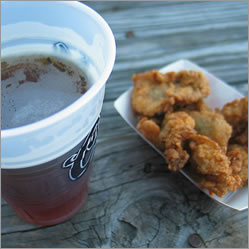
Beer And OystersMany kinds of beer work well with oysters.  Porter, Stout, IPA.  Strong flavors work well to cleanse the palate in between bites so that the fishiness of the oysters is not overwhelming.  A good, clean break in between bites is highly desirable.  In regions where beer choice is limited, beer is still preferable to non-alcoholic drinks.  For raw sea foods, a hard liquor is helpful for keeping any rouge bacteria in check.  Tequila and Sake shots especially, although please don’t mix.

If you are talking about grilled fish, grilled salmon, mussels, prawns, your best bet for a complimentary beer is a dark beer.  Porter, Schwarzbier, Stout, all go well in this setting.  I recommend the black lager especially for enjoying beer and oysters a hot or warm day.

Lighter beers have their place, too.  Certainly for broiled or boiled fish, shrimp, mussels, a pale ale, a pilsner, or even wheat beer can be quite complimentary.  Bitters and IPAs can also help break down the oily taste of deep fried sea foods (very popular).  A good idea to wash down a plate of fish and chips.  This would be my choice for raw, shucked oysters, especially when I am enjoying them on the gulf coast of Vera Cruz in Mexico.  I always like to stop for raw oysters when traveling in that region.

One place where you can sample all of this and mix and match is Richmond, Virginia’s River City Beer & Seafood Festival in June.  Over 40 varieties of beer show up among vendors, brewers, and chefs at this festival annually to celebrate the union of microbrew and seafood.  Music is provided by the festival, and samples are provided for a festival fee.  For $25, you can buy a festival sample mug to enjoy unlimited samples from the brew selection.

Another festival honoring this tradition is the Confluence Wine, Beer, Seafood & Music festival in Oregon state’s Douglas County on the Oregon Coast.  Admission is only $7 at the door or $5 in advance. Confluence means "the flowing together of two rivers or more rivers."  The festival is held at just such an intersection, at Gardiner, Oregon, just two miles north of Reedsport.  A confluence is also "a coming or flowing together, meeting, or gathering at one point."  The perfect name for an event which gathers so many different aspects together under one banner.

Brewers in the land down under have found a way to express their love of beer and seafood. From Australia comes a unique beer designed specifically to enhance the flavors of seafood.  According to Blue Bottle Beer’s website:

"…[we’ve joined] American hops with German yeast, Australian barley and fused it with the cleanest water. We then added our unique ‘zesty finish’.  Bluebottle Beer ® is a seductive blend of lifted aromatics, bitterness, and a citrus sting to enhance the flavors of the sea."

This would seem to go well with broiled, boiled, or BBQ’ed fish and seafood.  The zesty citrus sting they allude to gives me the idea that some Belgian ales would also enhance a seafood meal. 

Recently, when I went to eat at San Antonio’s Water St. Oyster Bar, I encountered the particular mix of Chimay with some Arcadian style cooking, and I must say I was quite pleased!  The especially spicy styles of cooking coming from the Louisiana area need a powerful beer to balance them best.