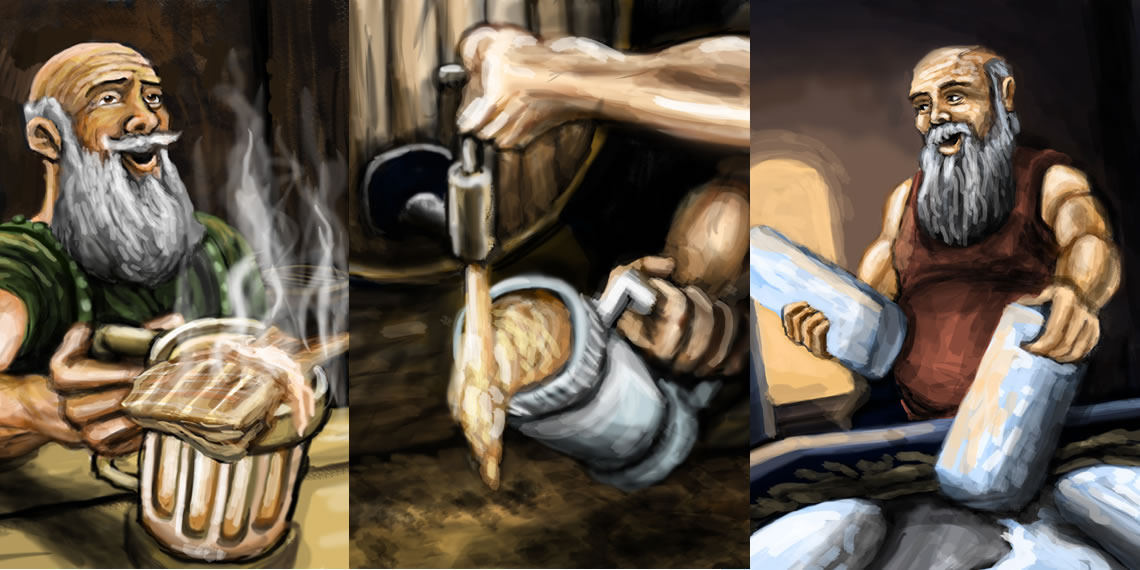
The prohibition era stamped out what few remaining craft breweries survived the era of the Beer Barons. For 13 years, from 1920-1933, beer became increasingly hard to find, and many of the German immigrants to whom beer was such an important cultural landmark were taken aback. There was a small period when the National prohibition legislation was looming when brewers even turned against distillers in an effort to make beer seem more wholesome than the "hard stuff", but this effort had little effect upon the Prohibitionist's momentum.
Fortunately, the technology of cold beer production did not really lose anything during this period, as many breweries switched off into soda production, and switched back to beer making after the end of prohibition. Still, only about 160 breweries were able to survive prohibition and re-open their doors. They used a variety of tactics during the waiting out period that lasted those thirteen years.
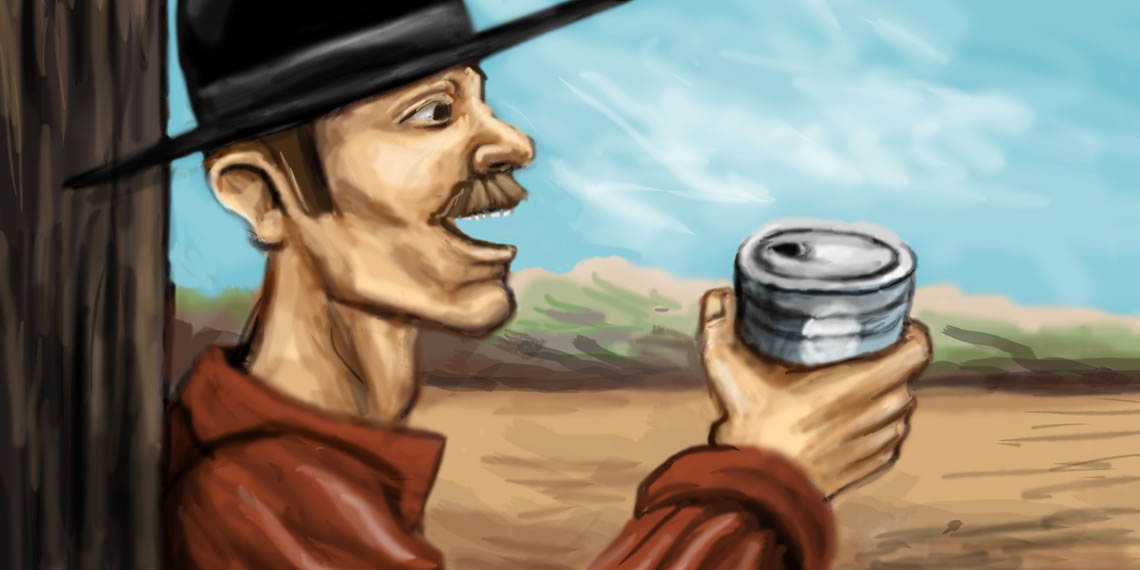
This was a terrible era for beer. It was not as efficient to make beer as it was spirits, so the law breakers looked towards the more profitable and concentrated product: moonshine. Beer was still made, but it became more of a private affair, and the farmer, as always, still had the old home brew.
One brewery, used many of the tactics all at one facility: the Diehl Brewery of Defiance, Ohio, began the conversion of their family brewery to a milk condensing plant in order to survive the prohibition era. Although planning ahead, they weren't quite done with the plant's conversion when prohibition laws hit them. They started making their plans around 1910, when it became unavoidable that prohibitionist groups would not relent in their zealous endeavor to rid the United States of alcoholic beverages. Groups such as the Anti-Saloon League and the Women's Christian Temperance Union were strong in the state of Ohio and elsewhere.
Ohio became completely dry May 1919. The statewide referendum was passed in 1918, so the Diehl brothers had a little time to put their plans into action. They started by making "near beer", a product with somewhat the taste of beer, but almost no alcohol. Their adaptability had drawn interest from investors, with which they got their milk condensing operation running by 1922. At this point, they knew it was going to be a long wait.
The Diehl brothers also kept their bottling machines in top shape by producing a variety of soft drinks, and after thirteen years of prohibition they opened up again as a brewery. Within two weeks of the repeal of the National Prohibition Amendment the Diehl Brewery's beer was back on the market. But the market had changed, big time. It seems likely that the repeal of prohibition was stimulated by the great depression.
Those breweries that managed to survive prohibition were opening their doors onto the great depression, but at least people wanted to drink.
Saloons were no longer the main outlet for beer - people wanted to take beer home with them. New cooled transportation units could take the beer to a much farther market. And women were drinking beer. By the end of prohibition, General Electric was making ice machines for the home, and by 1937 over two million Americans had refrigerators in their homes.
It is likely, at this point, that the first at-home beer dispensing units were being made. It wasn't until after world war two that these units became common, similar to the kegerator as we know it now.
 Continue to Part Six: Early Beer Draft Systems

Komos
 Summit
 Beverage-Air
 DCS
DCS
 Marvel
 Perlick
 Bull
Bull
 Avanti
 Danby
Danby
 CM Becker
 Continental
 Fagor
Fagor
 Cal Flame
 Twin Eagles
 Frigidaire
 Fire Magic
 GrowlerWerks
 Hestan
 Igloo
Igloo
 True
True
 Intertap
 Kegco
Kegco
 Keggermeister
 Koolatron
 KegLand
 Krowne
 Krups
Krups
 Lynx
Lynx
 Maxx Cold
 Micro Matic
 Midea
Midea
 Nor-Lake
 Nostalgia
 Arctic King
 Synek
Synek
 Taprite
 Turbo Air
 UBC Group
 Value Series
 Versonel
 VinoTemp
 New Leaf